Share
Share







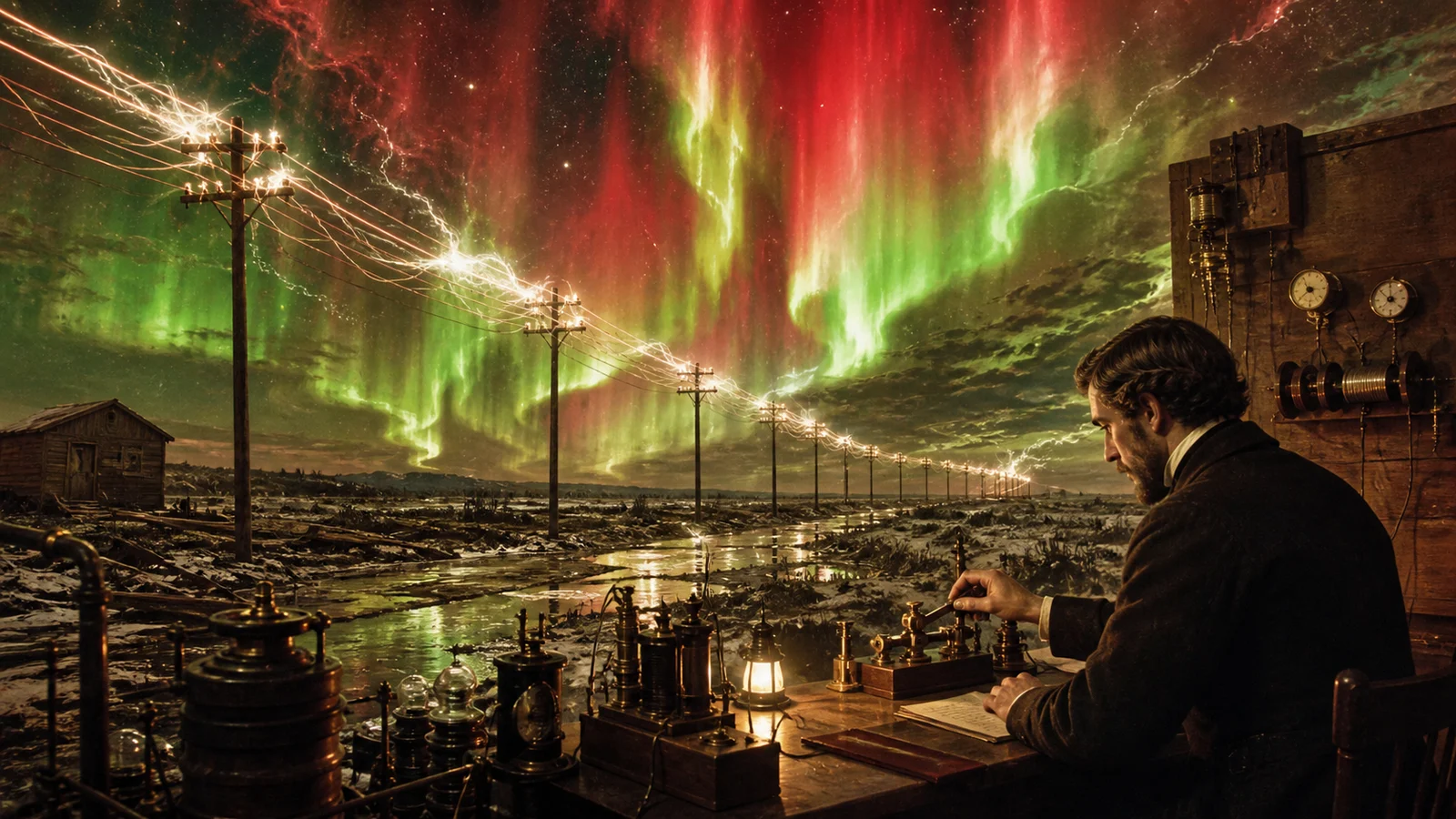
The telegraph was supposed to make distance disappear by controlling electricity. In 1859, electricity stopped behaving as if it belonged entirely to the operators. Signals failed, equipment sparked, and some telegraphers received shocks. In a few documented cases, operators disconnected their batteries and continued working with current entering the wire from somewhere else. The unexpected source was not a local generator. It was a magnetic disturbance that began with activity on the Sun.
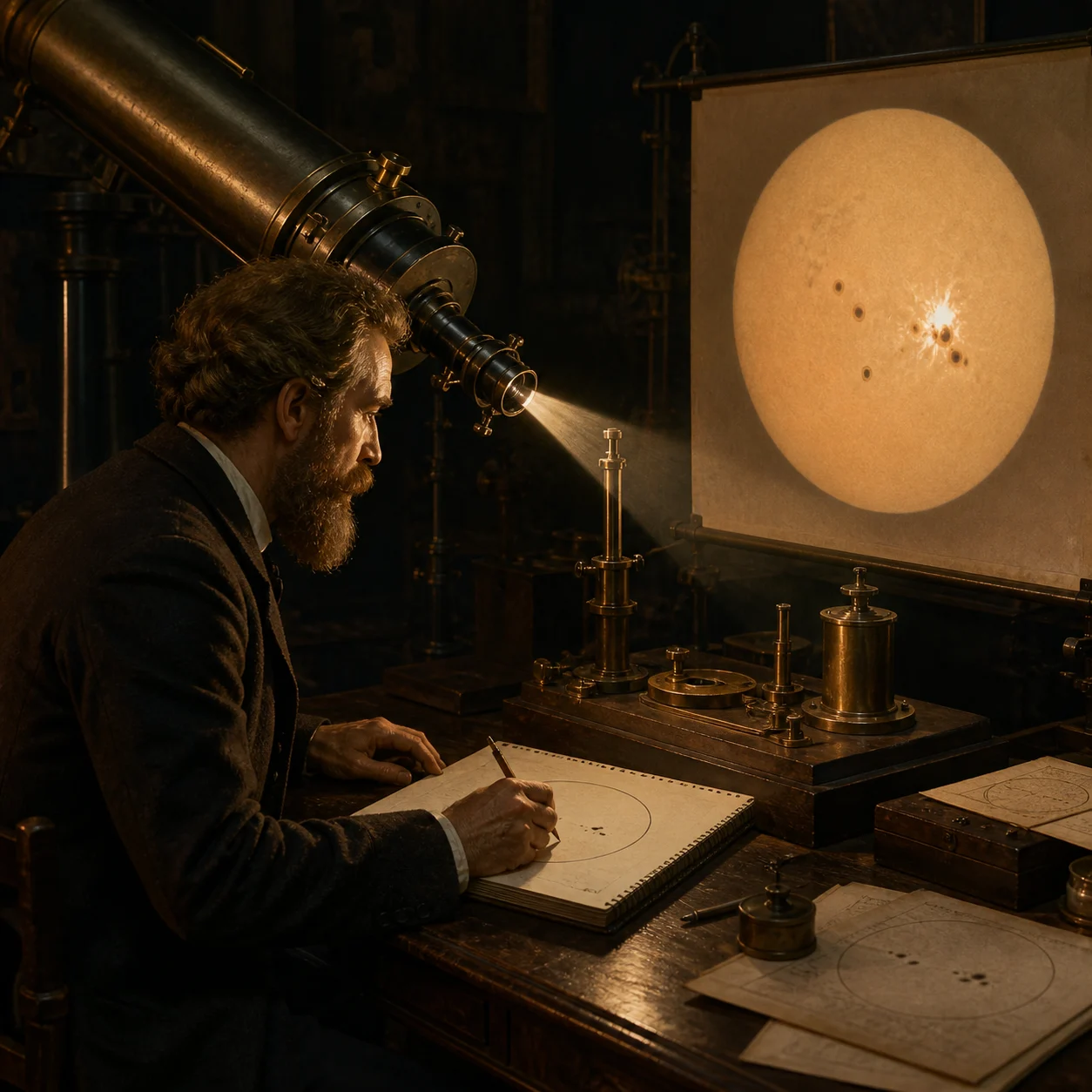
English astronomer Richard Carrington had been studying a group of sunspots when he observed an intense white-light brightening. Roughly seventeen hours later, auroras spread far beyond their usual polar territory. NASA's historical account places the northern lights as far south as Cuba; NOAA describes brilliant displays toward Panama and Florida. The sky made the storm visible, while magnetic instruments and telegraph networks recorded its electrical reach.
The event now bears Carrington's name, but its pieces were not fully understood at the time. Scientists did not yet possess today's picture of space weather. Modern accounts connect the observed solar eruption to a powerful geomagnetic storm: energetic material and magnetic disturbance from the Sun reached Earth and temporarily distorted the planet's magnetic environment. A change in that environment can induce electrical current in a conductor.
Telegraph lines offered extraordinary conductors. They stretched for long distances across the ground, linking stations through metal wire. When the magnetic field around Earth changed rapidly, the network behaved like part of a giant accidental generator. Current appeared where operators expected power to come from station batteries. It could overwhelm ordinary signaling, heat or spark equipment, and deliver shocks at the human end of the circuit.
That mechanism explains the story's most famous detail without turning it into magic. Some circuits reportedly kept operating after batteries were disconnected because geomagnetically induced current supplied electrical energy to the lines. Messages did not materialize by themselves, and the Sun did not select words. Skilled operators still opened and closed keys and interpreted signals. The storm powered or disrupted the medium; it was not the author.
Telegraph technology made the event legible in a new way. Auroras had been observed for centuries, but a continental electrical network translated a planetary magnetic disturbance into practical failures. A needle moved, a contact sparked, an operator felt a shock, or a circuit acquired enough current to work without its normal supply. Infrastructure became an instrument for sensing a process far larger than its designers had intended to measure.
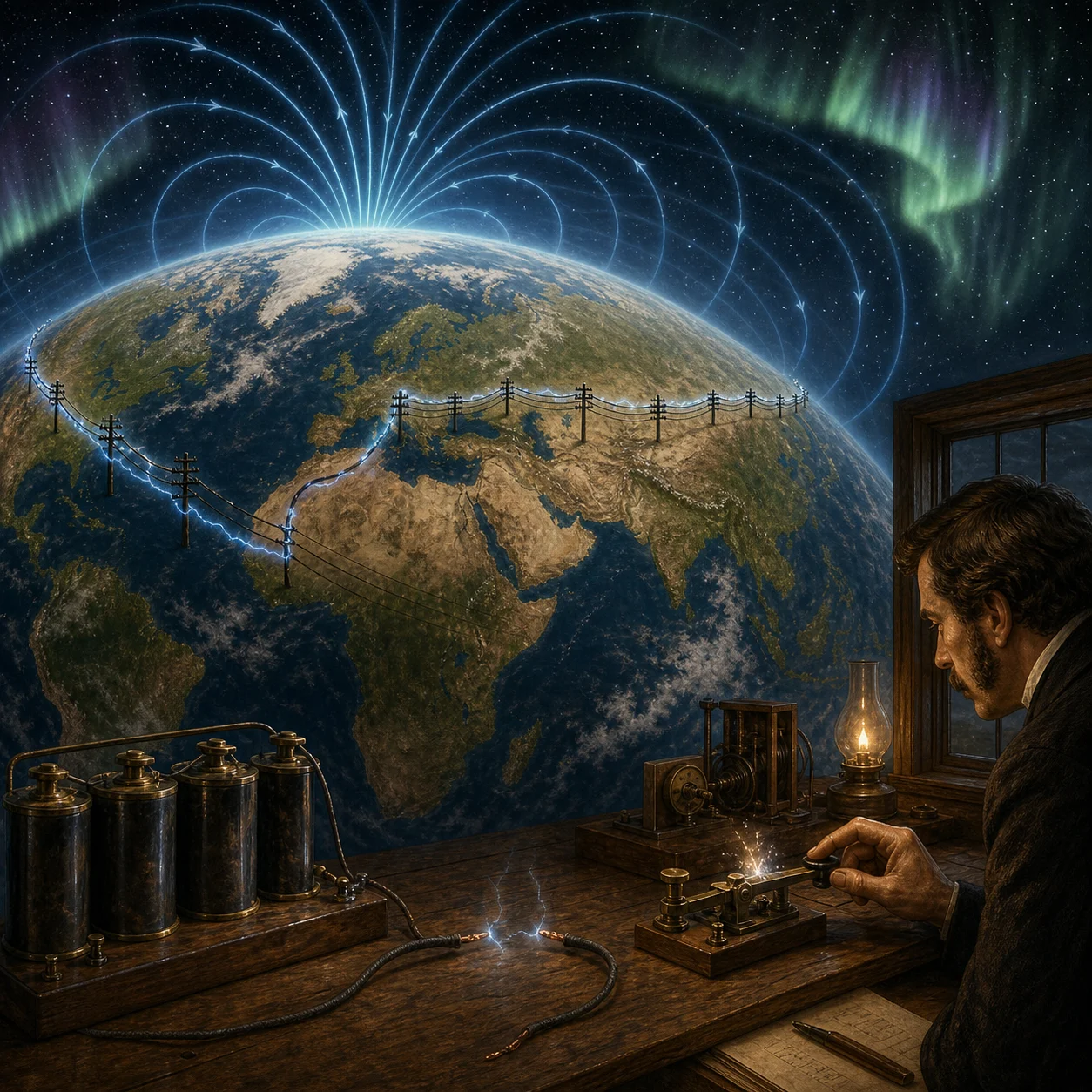
The geographic scale tied those incidents together. Bright auroras appeared at unusually low latitudes, magnetic instruments pushed beyond normal readings, and telegraph problems occurred across the Western world. What looked locally like a bad battery, an unruly wire, or a fire at a station belonged to one connected disturbance. The planet's magnetic field was the shared system beneath many separate machines.
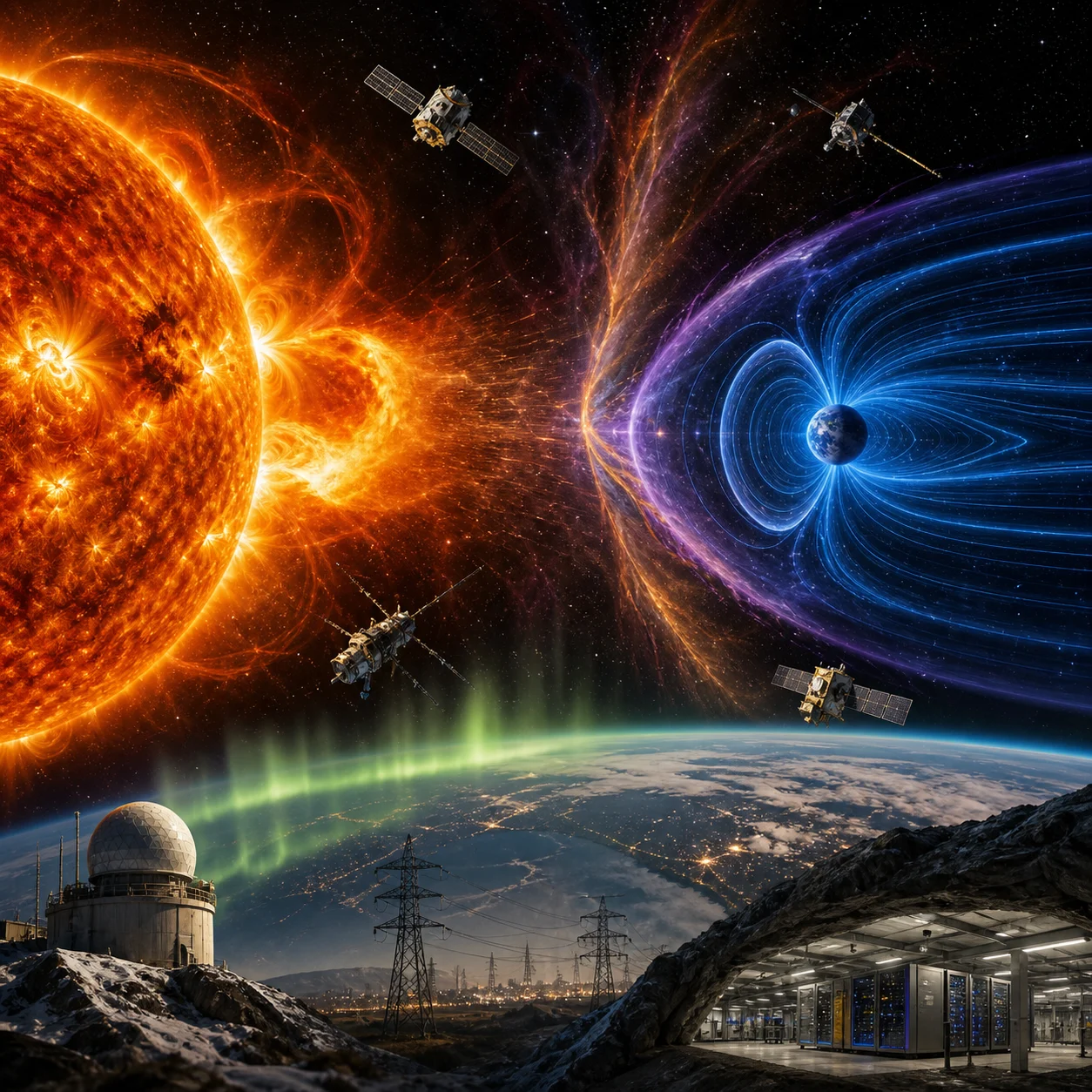
It is tempting to jump directly from those reports to a detailed disaster script for the present. Modern society has power grids, satellites, radio links, navigation systems, and many other technologies that did not exist in 1859. Space-weather agencies study how strong storms could affect them. But claims about an identical Carrington-scale event destroying a particular grid or producing a particular outage are scenarios and models, not observations carried forward unchanged from telegraph history.
That distinction matters because technology has changed in both vulnerability and protection. A telegraph wire is not a modern transmission line, and a battery-disconnected telegraph circuit is not a continent-sized power network. Engineers can monitor solar activity, issue warnings, alter operations, and design safeguards. The historical evidence establishes that geomagnetic storms can couple into human systems. It does not supply a guaranteed inventory of every modern consequence.
The responsible version of the story stays close to what people actually recorded. Carrington saw a rare white-light solar flare. A fast-arriving disturbance was followed by extraordinary auroras. Telegraph systems failed, sparked, shocked workers, and sometimes operated on induced current after their batteries had been removed. Each piece is remarkable, and together they connect an event on the Sun to a human hand at a communications key.
The telegraph is often presented as a machine that conquered geography. The Carrington Event revealed the larger geography inside the machine. Every long wire also occupied Earth's changing magnetic environment, and every circuit was open to physics beyond the station walls. The network carried human messages, but it could also carry an electrical consequence of space weather.
That is why the event remains more than a spectacular aurora report. It demonstrated that “weather” does not stop at the atmosphere and that infrastructure can become part of a planetary electrical experiment without permission. The most unsettling evidence was not a hypothetical future blackout. It was an operator disconnecting the expected source of power and finding the wire still alive—while remaining the person who had to send the message.
Sources