Share
Share







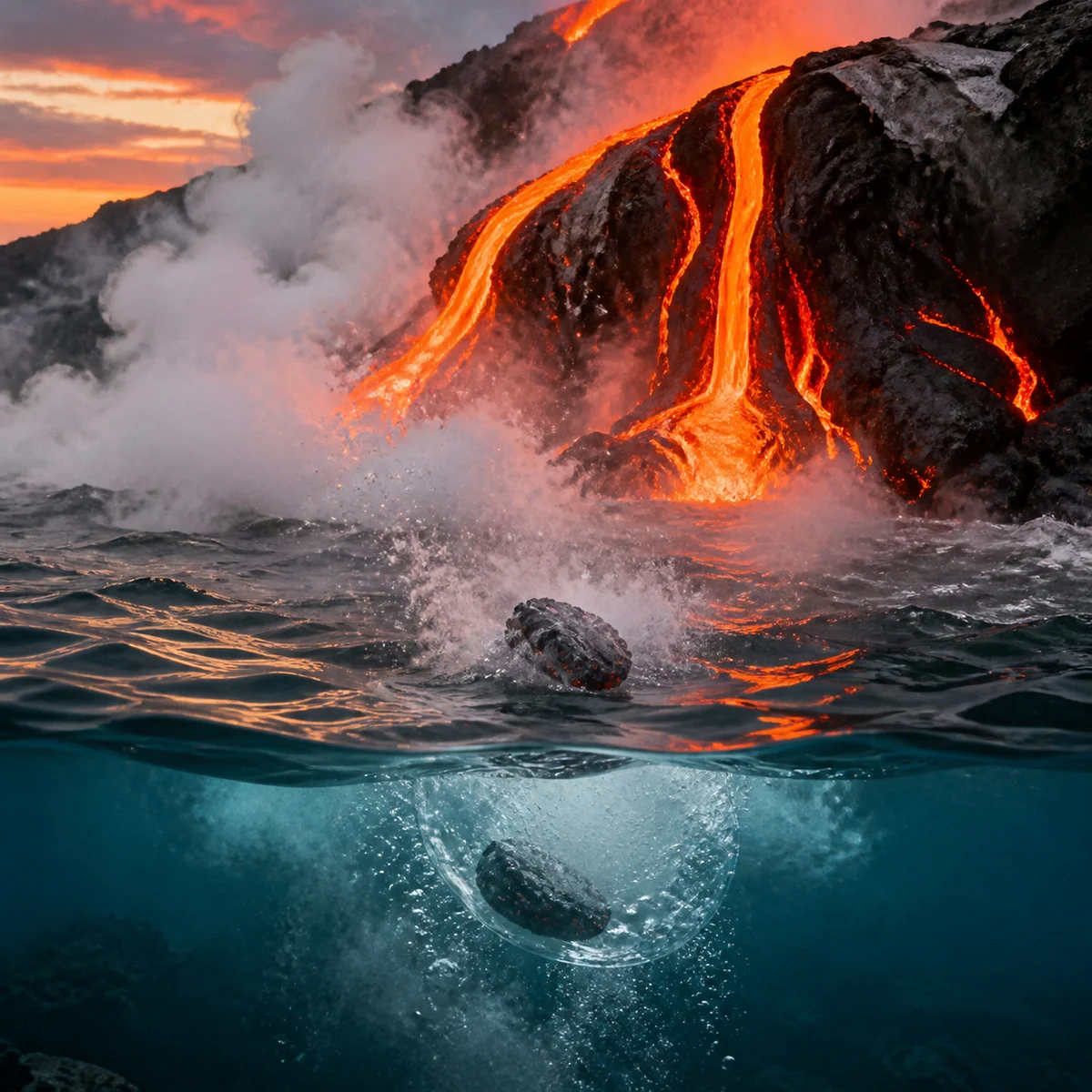
Lava rock is denser than seawater, so a fresh fragment at an ocean entry should sink. Sometimes it pauses first. When molten lava meets the sea, a chilled skin can form around hot material while steam or other gas remains trapped inside. That temporary pocket gives the fragment enough buoyancy to bob on the surface.
The performance is brief. Observers have seen pieces float for seconds or about a minute. Cracks and pores then admit water, the vapor escapes or condenses, and the rock drops beneath the surface. It is less a floating stone than a hot shell carrying a very short-lived life jacket.
The setting is crucial. Lava-ocean entries can produce explosions, collapsing deltas, corrosive steam plumes, and flying fragments. The observation is not an invitation to approach, and it does not mean ordinary solid lava remains buoyant. The weirdness belongs to the transition: new rock is cooling, gas and water are trading places, and density has not yet won. For a moment, a process that normally makes seafloor gives the surface a passenger.
Sources