Share
Share







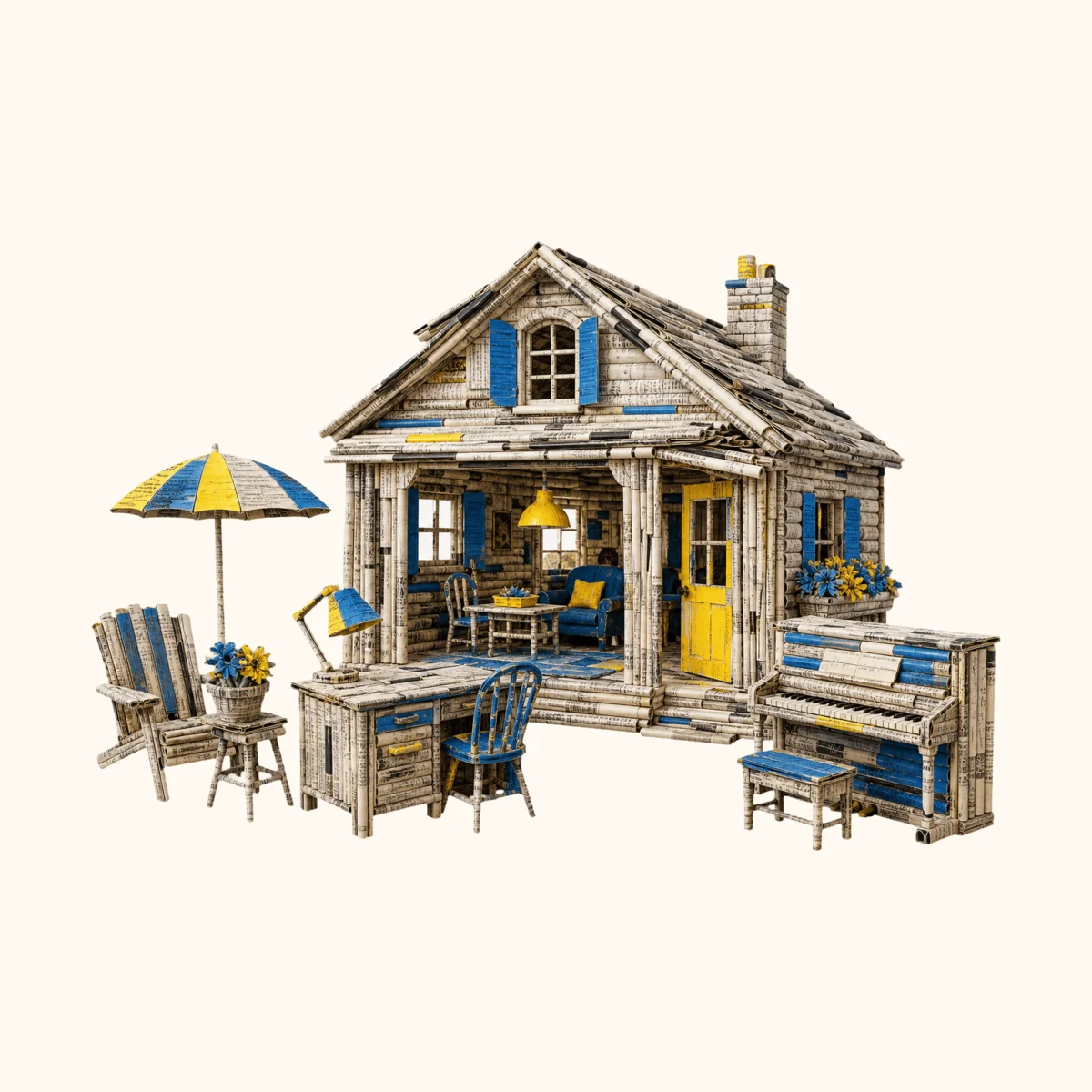
Mechanical engineer Elis Stenman designed machinery for making paper clips, then spent his spare time solving a much larger paper problem. Beginning in 1922, he built a summer house in Rockport, Massachusetts, with a conventional wooden frame, floor, and roof—but walls made from layers of old newspaper glued together and coated with varnish.
The experiment did not stop at the walls. Stenman rolled newspaper sheets into tight paper logs, cut them, and assembled furniture. The house contains paper chairs, a desk, a grandfather clock, and a piano covered in newspaper. Headlines, advertisements, and fragments of ordinary daily print remain visible across the surfaces.
A newspaper is designed to become obsolete almost immediately. The Paper House reverses that schedule. Reports meant to last a day were laminated into building material, while discarded pages became objects meant to support bodies, hold possessions, and occupy rooms. It is not literally paper from foundation to roof, but the paper is not decoration either. Yesterday’s news became the part of the house that visitors still come to read.