Share
Share







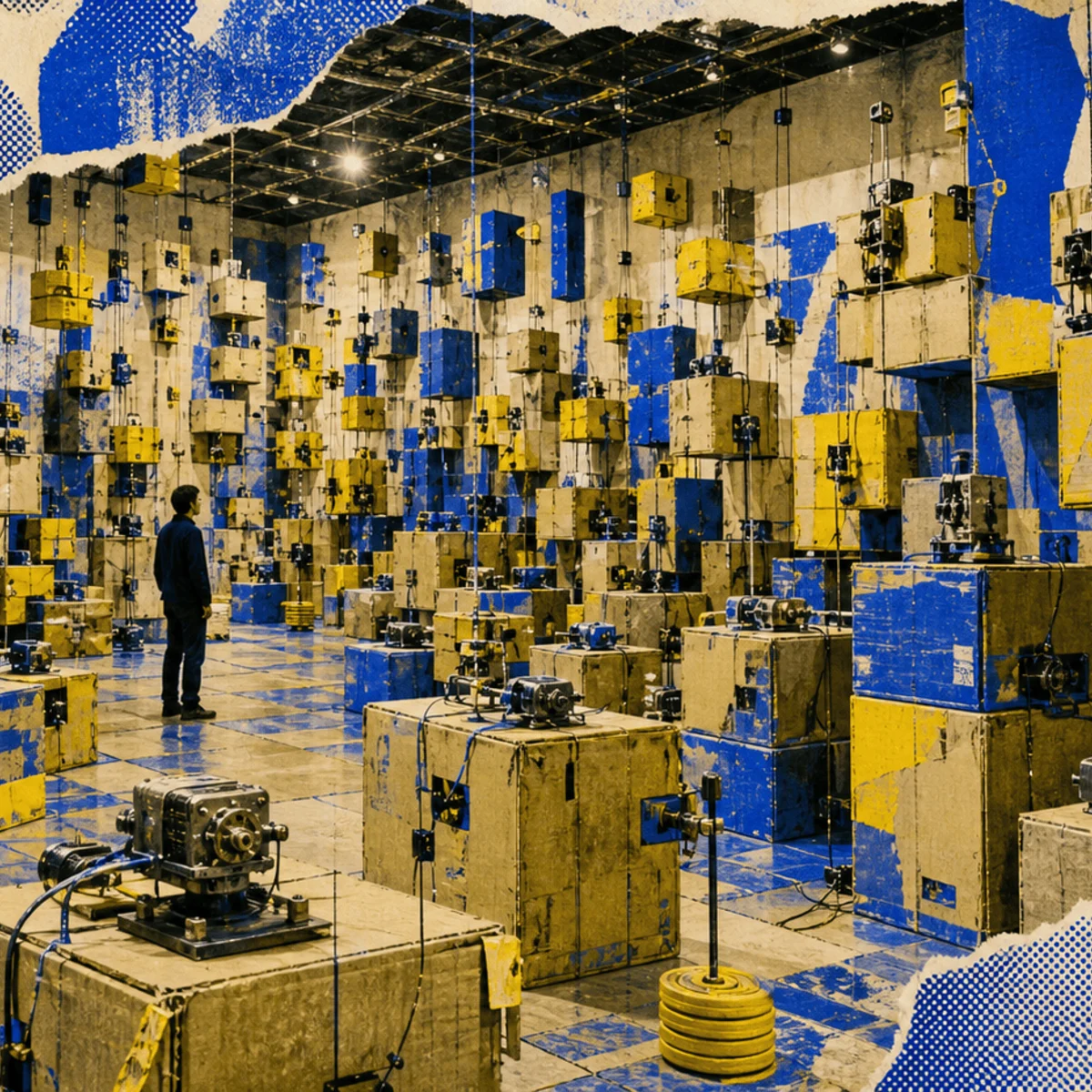
A cardboard box is normally a container. In Zimoun’s installations, it can become a drum, resonator, wall, moving block, and acoustic building material. The Swiss artist connects ordinary objects to small mechanical systems, repeats the arrangement across a room, and lets modest movements accumulate. One motor may produce a buzz or tap. A hundred of them can make the architecture seem to shiver.
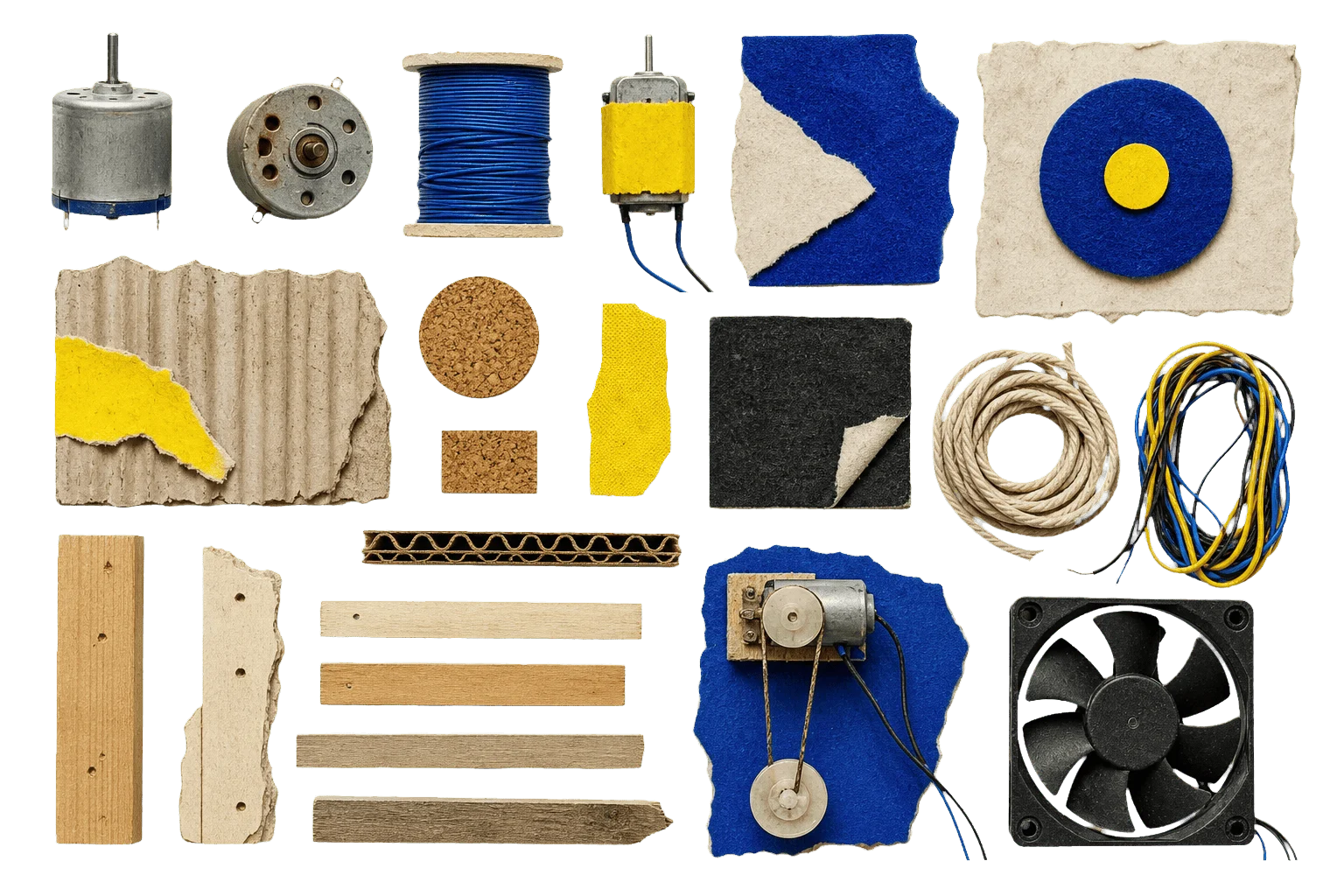
Zimoun lives and works in Bern. His official biography describes his practice as the construction of architecturally minded platforms of sound using commonplace industrial objects. The vocabulary is intentionally plain: cardboard, wood, wire, rope, felt, cork, motors, fans, and other materials that usually belong to packing rooms or workshops. Nothing needs to disguise its function. The motor can remain a motor; the box can remain visibly cardboard. The change happens through repetition and activation.
The titles often read like inventory labels. A work might be named for a precise number of prepared DC motors, a material, and the dimensions of its boxes. That naming system removes the usual poetic title and tells viewers what has been assembled. It also sets a small trap. Knowing the parts does not tell you exactly what the room will do once all of them begin moving.
Museum Haus Konstruktiv documented that gap in a 2021 exhibition. One installation was titled “104 prepared dc-motors, 825 cardboard boxes 35 x 32.5 x 32.5 cm.” The boxes were arranged in groups of three and stacked. Some carried motors fitted with weights. As the weights rotated, their imbalance transferred motion into the boxes, making the stacks jerk and wobble at different speeds.
The physical setup was simple enough to explain in a sentence: weighted motors agitated stacks of cardboard. Its combined effect was not simple. The museum described repetitive scratching, rubbing, and scraping that turned the exhibition room into a sound box. Cardboard was no longer just the surface being struck. It formed the bodies producing the noise, the repeated visual field, and part of the room’s temporary acoustic architecture.
Repetition makes the system legible from a distance. Rows and grids suggest order, measurement, and a plan. But each motor, attachment, box, and contact point carries tiny differences. A weight meets one surface at a slightly different angle. One stack flexes more than another. Timing drifts. The installation begins with many related units and produces a field of variations. Pattern and accident arrive together.
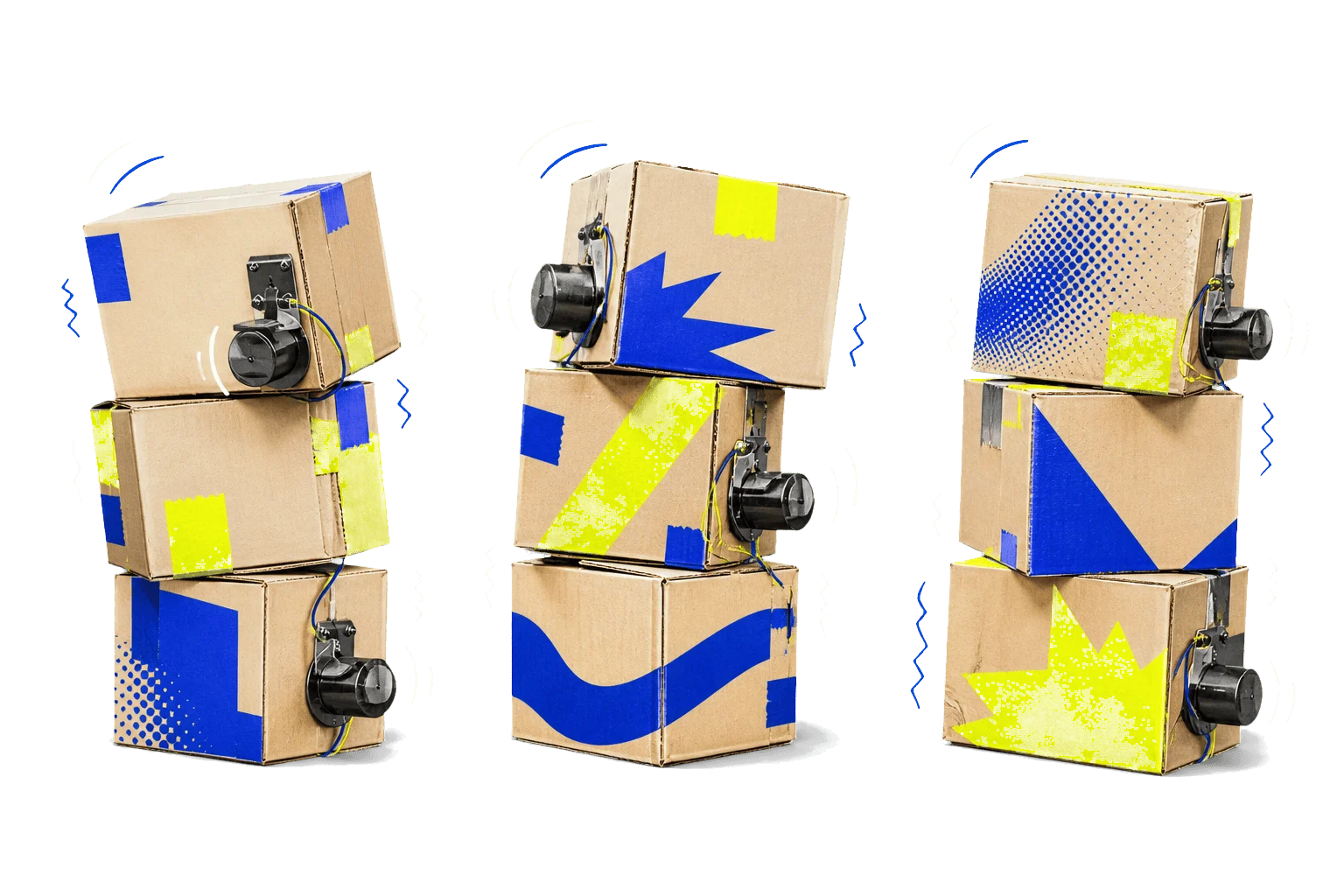
This tension is central to how Zimoun’s work is described. His official biography places orderly modernist structures against chaotic forces and uses his phrase “primitive complexity” for the principle behind the installations. The primitive part is not a judgment about the materials. It points to the basic action: rotate a motor, pull a wire, strike a surface, move air. Complexity appears when those actions are multiplied and allowed to interact with real matter.
The sound is therefore not pasted onto a sculpture. It is evidence of the sculpture moving. A cork ball, felt piece, chain, wooden slat, or cotton ball makes a different noise because its mass, texture, flexibility, and point of contact differ. Change the material and the composition changes. Change the room and reflections change too. The installation is simultaneously an object, a mechanism, and an environment for listening.
The official works archive makes the range of this method visible. It lists works using prepared motors with cardboard, wire, cotton, rope, cork, brass cups, wooden type cases, paper, metal containers, and even a carrier-pigeon cage. Other pieces use speaker membranes, ventilators, air, magnets, or amplified woodworms. The ingredients vary, but the method repeatedly asks what a material will reveal when a small action is sustained.
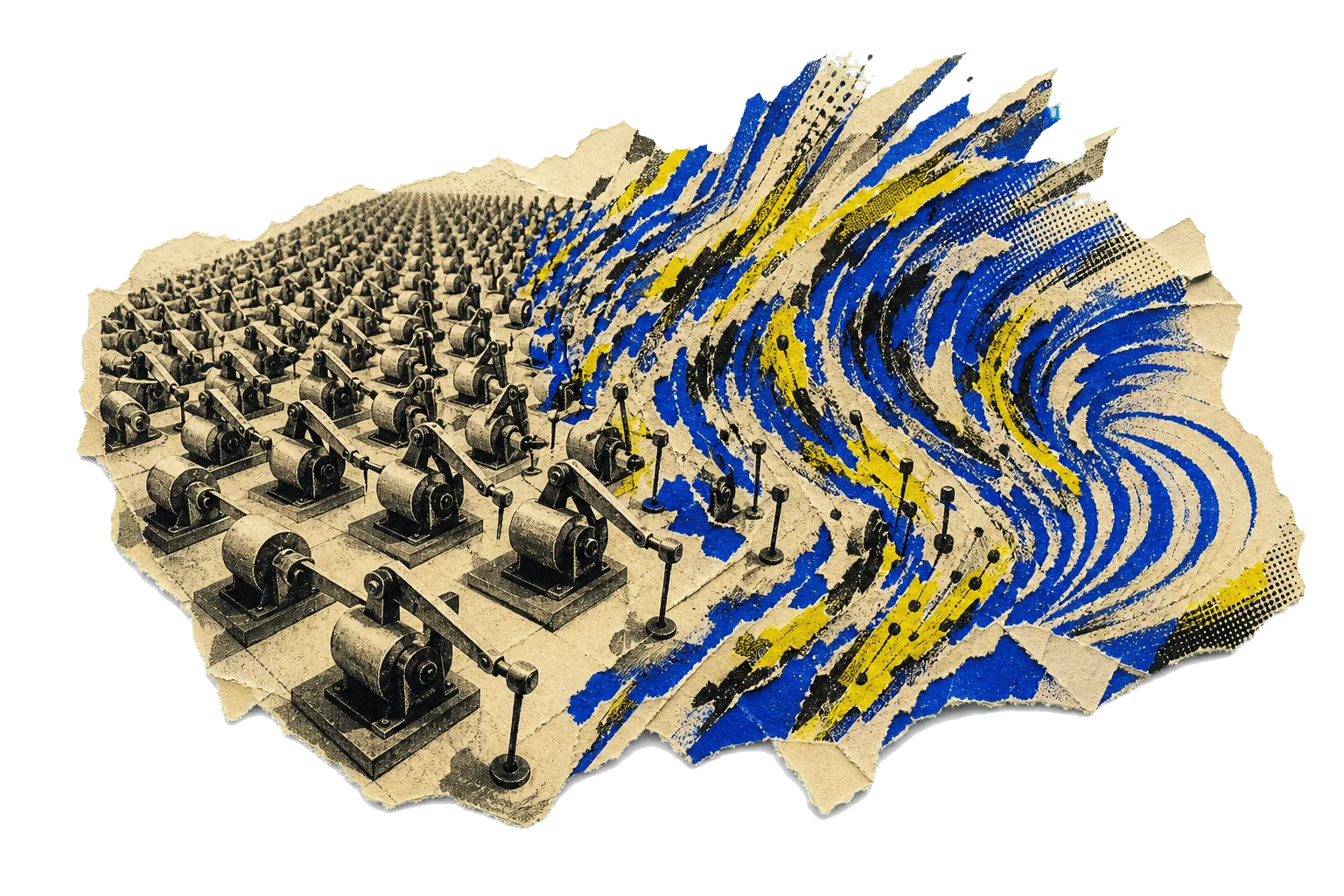
There is also an unusual honesty in the machinery. These are not sleek robots pretending to be alive. Wires, motors, weights, and supports frequently remain visible. A viewer can understand enough of the cause to follow it, while the total result still exceeds any single device. The mystery comes not from hiding the mechanism but from showing hundreds of mechanisms at once.
That is why the installations can resemble natural conditions without imitating a specific storm, insect swarm, or rainfall. Many independent events share a space. Their combined rhythm changes continuously even though the rules stay narrow. The work behaves less like a song played from beginning to end and more like a climate produced by matter under repeated pressure.
Zimoun’s biography says the materials are reused after exhibitions, either in new works or other contexts. That detail suits an art built from temporary arrangements. A roomful of boxes can be assembled into a trembling acoustic structure, dismantled, and returned to circulation. The individual components remain ordinary. Their brief coordination is the artwork.
The 2021 cardboard installation did not need to make its boxes look precious. It needed 825 of them to occupy a room, 104 prepared motors to disturb the stacks, and enough time for scratching, rubbing, and scraping to separate into a dense field. The room became audible because the materials could not move silently. In Zimoun’s hands, that resistance is not a flaw in the machine. It is the instrument.
Sources