





 Share








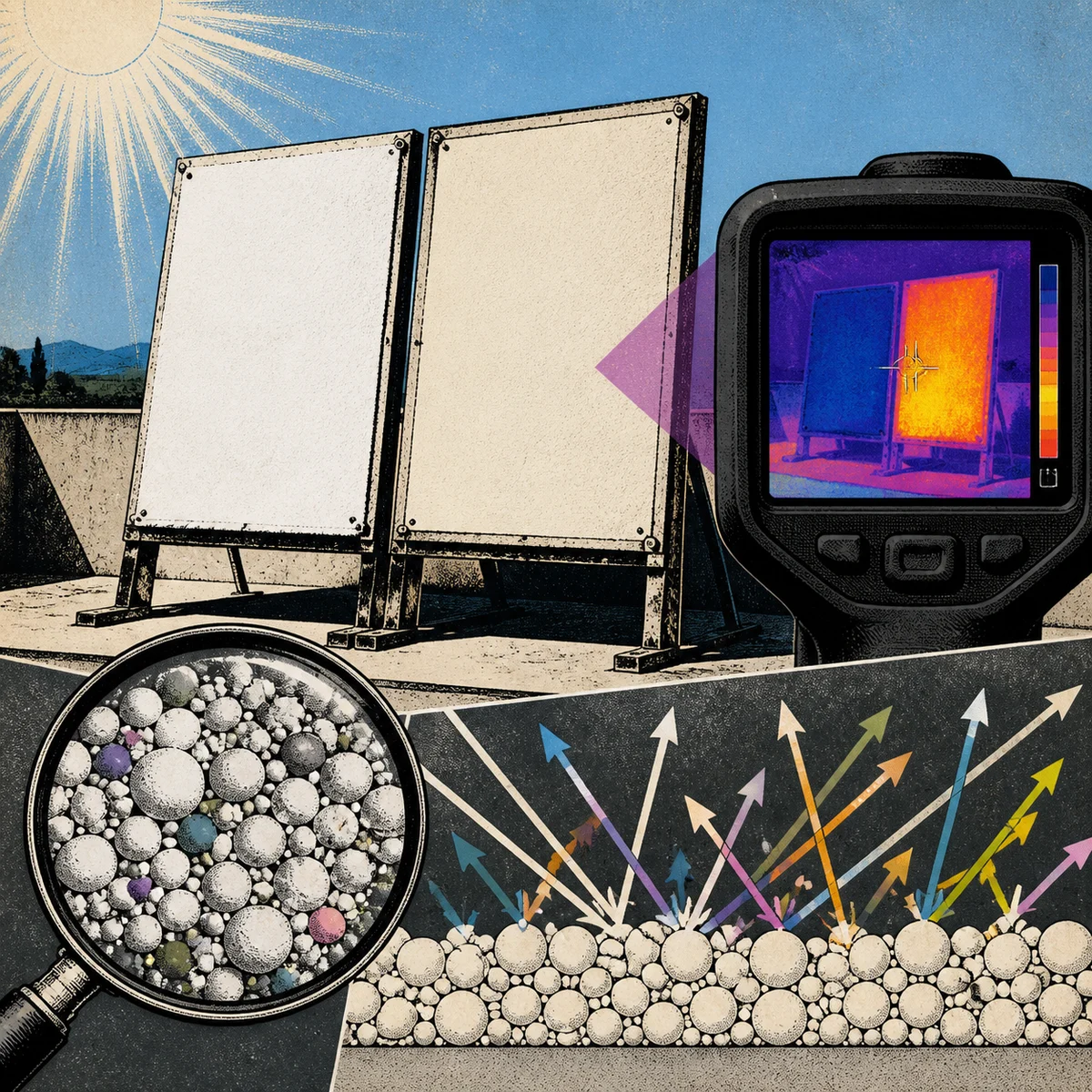
Purdue’s ultra-white paint packs a high concentration of barium sulfate particles into an acrylic coating. The particles come in a wide range of sizes, so together they scatter many wavelengths across the solar spectrum. In the reported formulation, the surface reflected up to 98.1 percent of incoming sunlight.
Reflection prevents most solar heating, but the paint also radiates infrared energy at wavelengths that pass efficiently through the atmosphere. That combination produced passive cooling below the surrounding air: outdoor samples stayed as much as 19 degrees Fahrenheit cooler at night and eight degrees cooler under strong noon sunlight. An infrared camera showed the white patch as colder than the board carrying it.
More pigment is not automatically better. Pack the particles too densely and the coating becomes prone to breaking or peeling, so the formulation balances reflectance with usable paint. The team estimated that a 1,000-square-foot coated roof could provide about 10 kilowatts of cooling under the study’s assumptions. That is an estimate, not a promise for every roof, climate, thickness, or building. The material’s trick is passive heat balance, not powered refrigeration hidden in a bucket.
Sources