




 Share








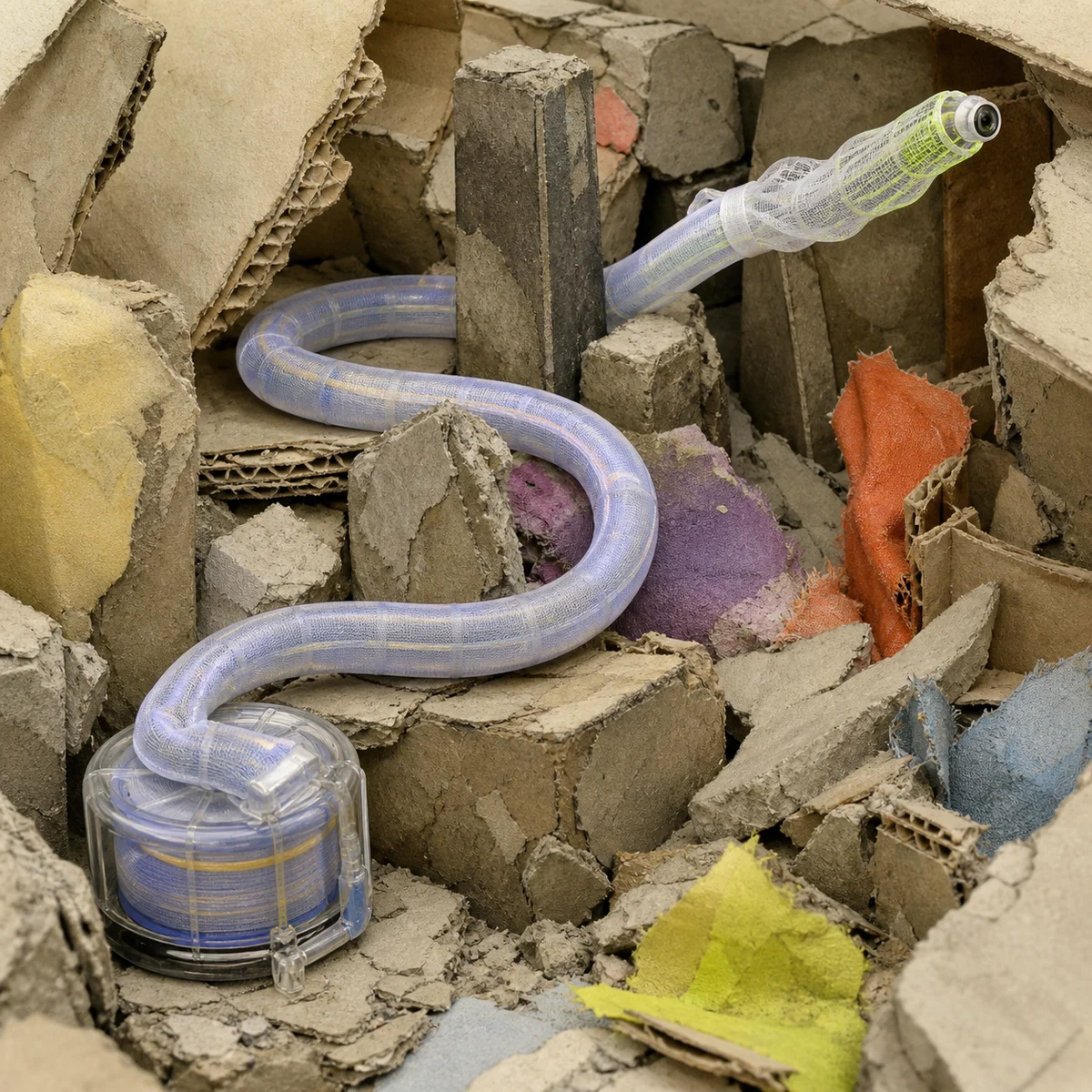
A vine does not drag its entire length forward when its tip reaches farther. Stanford researchers borrowed that basic geometry for a soft robot. The device stores flexible tube material inside itself. Pneumatic pressure pushes the innermost material toward the front, where it turns inside out and becomes the new outer wall.
Only the tip advances relative to the environment. The portion already extended can remain largely stationary against the floor, rubble, pipes, or other surfaces. That reduces the sliding friction and snagging a conventional robot experiences when its whole body must be pulled along a winding route.
With steering at the front, the robot can curve through clutter and enter spaces smaller than a rigid machine. A camera, sensor, or delivery tool near the tip can reach into a collapsed structure or complicated installation while the soft body follows the path already laid. The technique also spreads contact rather than concentrating it in hard wheels or joints.
The word “grows” describes eversion-driven extension. No biological tissue appears, and the robot cannot reproduce. Its added length comes from material prepared and stored in advance, propelled by pressure through the body. That resource eventually runs out, and reversing the motion creates its own problems. The achievement is locomotion by placement rather than travel: keep the old body still, turn hidden material outward at one point, and let the destination pull farther into reach.
Sources