Share
Share







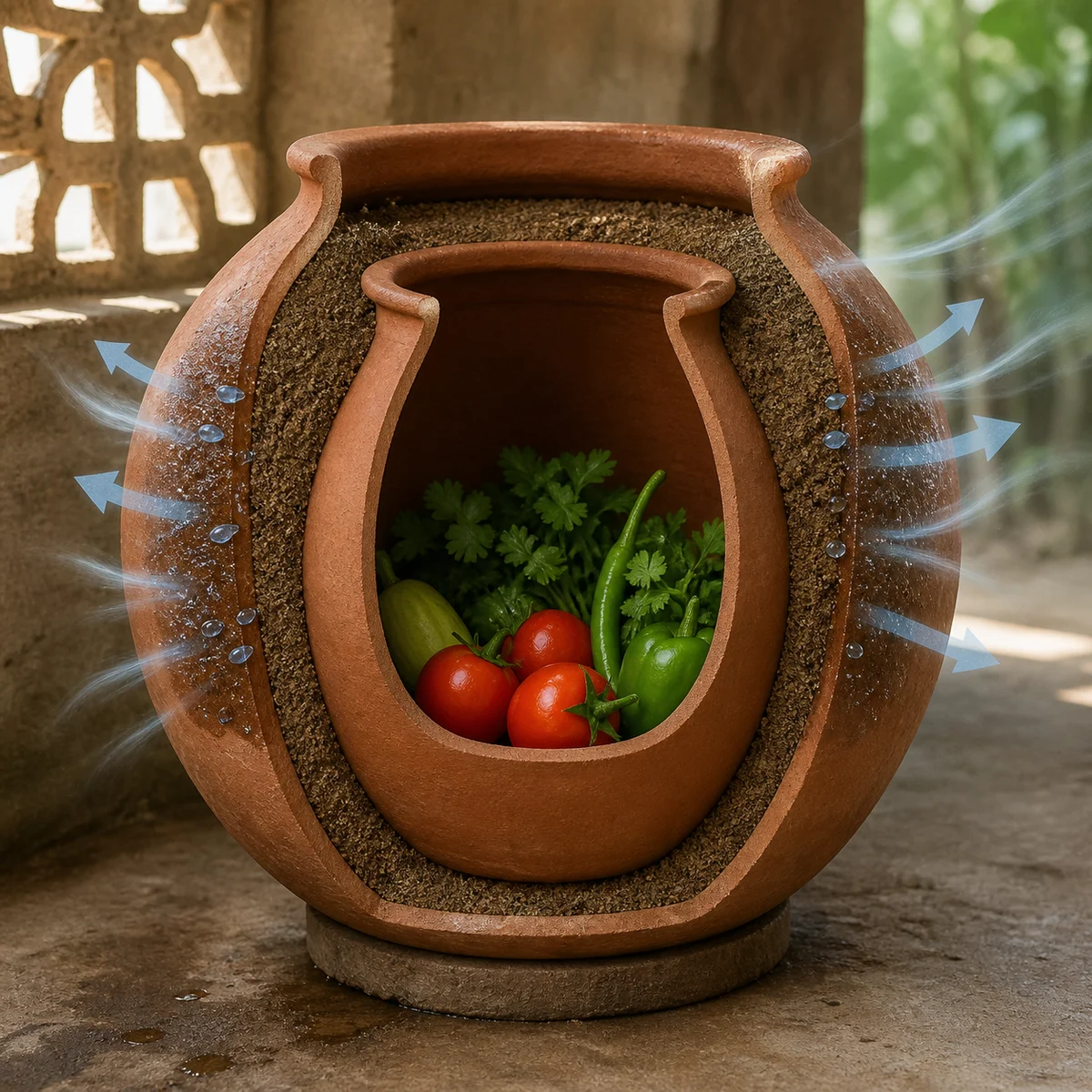
An evaporative clay-pot cooler nests a smaller storage pot inside a larger porous one and fills the gap with wet sand. Water migrates through the outer clay and evaporates from its surface. Evaporation requires energy, and that energy leaves as heat drawn from the pots and their contents. The inner chamber becomes cooler than the surrounding air, giving harvested produce a gentler storage environment than the hot room outside.
The method can extend the freshness of fruits and vegetables where electric refrigeration is unavailable or costly. A cover shades the food, clean water keeps the sand wet, and airflow carries humid air away from the surface. Geometry and materials matter: the pots must be porous enough to release water, the gap must stay moist, and the cooler should sit where air can move without direct sun reheating it.
This is a traditional family of technologies rather than one invention with a simple owner. It also is not a universal refrigerator. Evaporation works best in hot, dry air; high humidity slows it because the air already holds more water vapor. Maintenance, water quality, airflow, and local climate determine performance. The pot does not manufacture cold. It spends water to move heat.
Sources