Share
Share







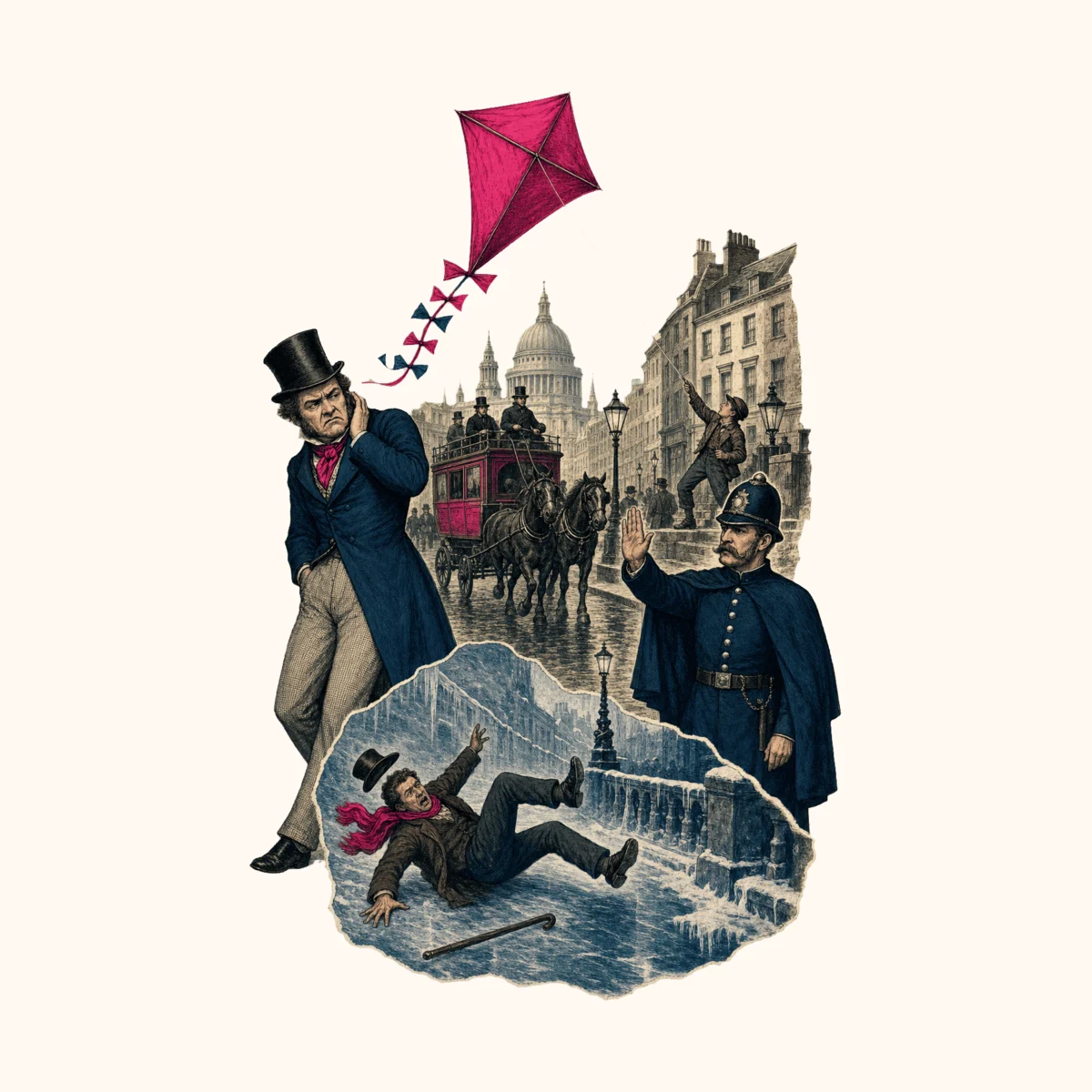
The Metropolitan Police Act 1839 did not simply announce that Londoners could never fly kites. Section LIV assembled a long list of street and public-place nuisances within the Metropolitan Police District, then attached conditions to many of them. The kite appears in clause 17 beside games and improvised winter slides.
The wording covered any person who would “fly any Kite or play at any Game” to the annoyance of inhabitants or passengers. It continued with anyone making or using a slide on ice or snow in a street or thoroughfare to the common danger of passengers. Annoyance mattered for the kite and game; common danger mattered for the slide. Remove those conditions and the old provision sounds broader—and sillier—than the text actually is.
The section also said a Metropolitan Police constable could take into custody, without warrant, someone committing one of the listed offences within the constable’s view. The kite clause belonged to a larger attempt to manage crowded shared streets, not a legislative campaign against string and paper. Because the current enforceability of this particular wording is not established by the sources used here, the safest historical description is precise: in 1839, Parliament made an annoying street kite one item in a catalog of visible metropolitan nuisances.
Sources