Share
Share







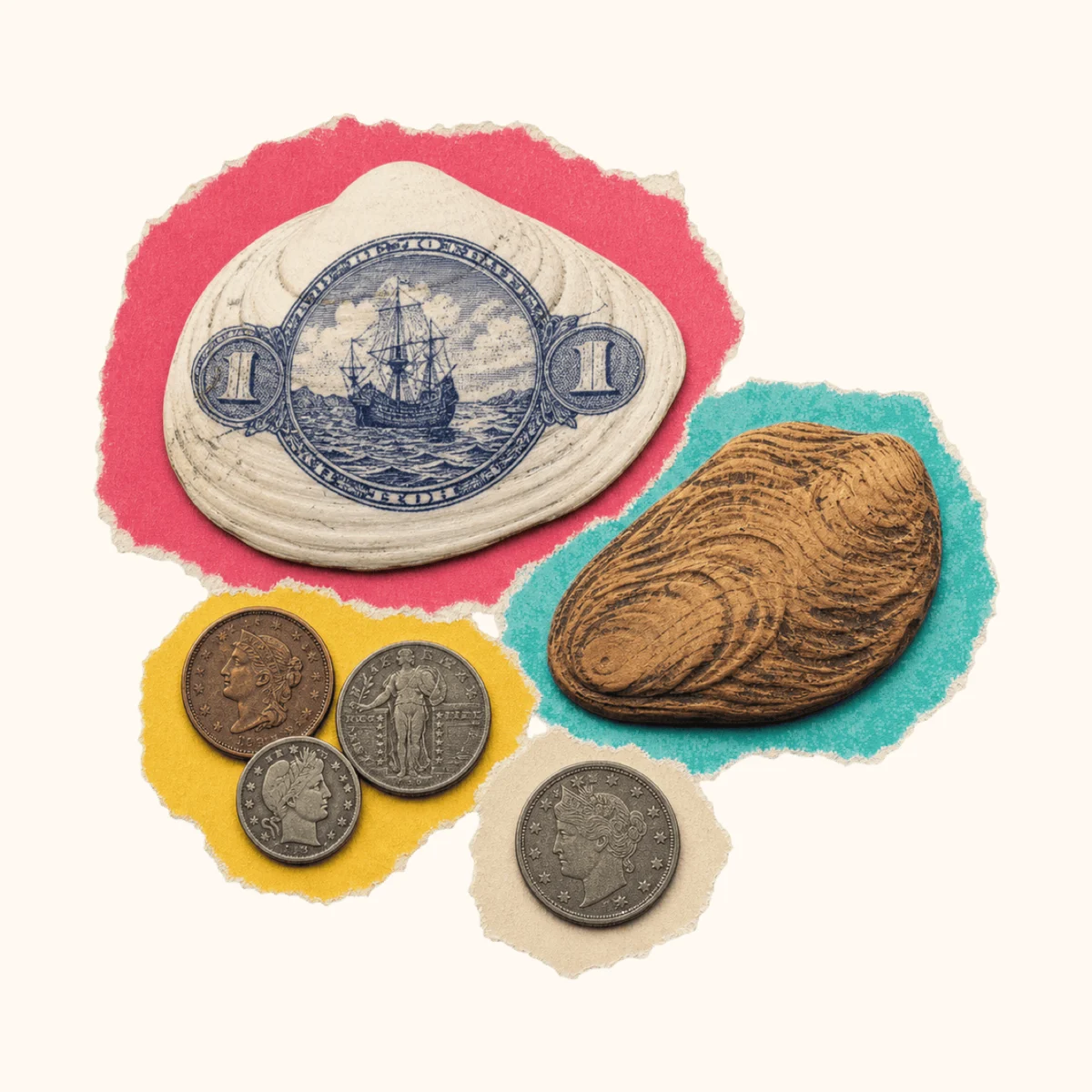
When the Great Depression’s banking crisis disrupted ordinary currency, some communities improvised money from materials already close at hand. Pismo Beach, California, issued denominations on real clamshells. A surviving 1933 one-dollar shell in the Smithsonian carries familiar currency language, including “In God We Trust,” on a decidedly unfamiliar surface.
Olympia, Washington, chose a related joke with a different material. Its emergency money included wooden pieces shaped like oyster shells, one of them worth twenty-five cents. The token looked local because it was local: a small carved substitute created to keep exchange moving when conventional money was scarce.
The two objects now sit inside the Smithsonian’s National Numismatic Collection, where metal coins and paper notes share storage with a shell from a beach town and a wooden oyster from the Pacific Northwest. A financial crisis had briefly turned the shoreline into a design department.