




 Share







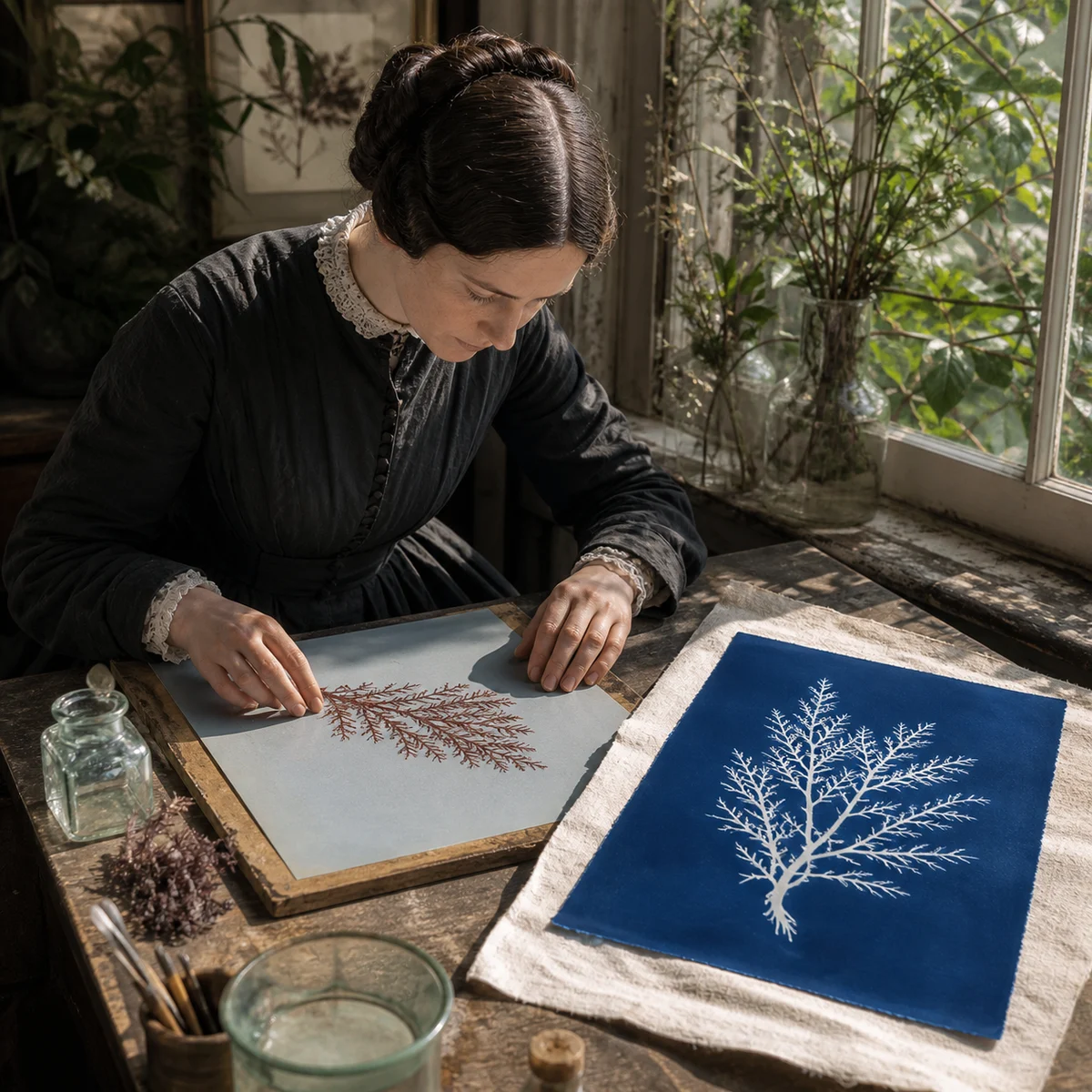
Anna Atkins placed algae specimens directly against paper coated for the cyanotype process. Sunlight struck the exposed chemistry while the plant blocked portions beneath its fronds. After processing, uncovered areas became deep Prussian blue and the protected shapes remained pale. Each specimen left a contact silhouette scaled exactly to the object on the sheet.
That directness suited delicate marine botany. Branches, blades, air bladders, and lace-like edges appeared without an illustrator translating them by hand. Atkins could arrange a specimen carefully, expose it, and preserve a recognizable structural record. The resulting page is both index and image: scientifically useful form presented with strong visual rhythm.
She assembled the prints into Photographs of British Algae. The British Library describes it as the first photographically illustrated book. Cyanotypes run throughout the work rather than appearing as a single novelty plate, making photographic production part of the book's basic method.
Publication was private and gradual. Atkins issued the work in parts over time, and every plate demanded sensitized paper, specimen placement, exposure, washing, drying, and assembly. Copies could therefore vary, and the project belonged as much to sustained manual labor as to sunlight.
The phrase “printed with seaweed” needs one small correction: algae did not supply pigment. The specimen acted as a mask. Light and iron-based chemistry made the blue image around it. When Atkins lifted the original plant away, what remained was a pale botanical ghost whose accuracy came from direct physical contact.
Sources