Share
Share







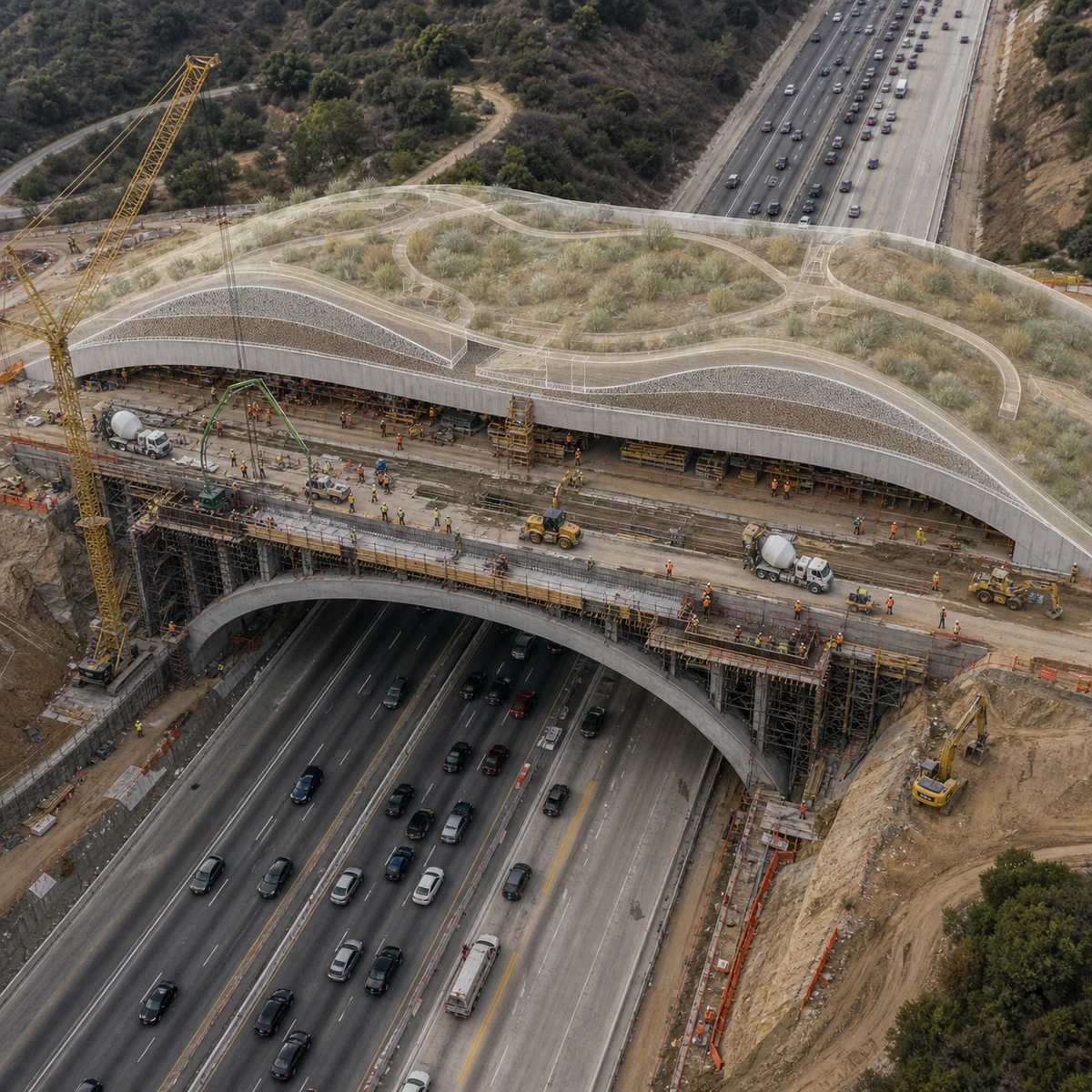
The freeway through the Santa Monica Mountains does more than move cars. Ten lanes of pavement split wildlife habitat, limiting the routes animals can use to find territory and mates. Decades of National Park Service mountain-lion research documented that fragmentation and helped establish the need for the Wallis Annenberg Wildlife Crossing.
The design turns an overpass into landscape. Soil and native planting are intended to continue habitat across the highway, while structures, light controls, and vegetation reduce the sensory presence of traffic. The goal is a usable corridor for many species rather than a narrow concrete walkway with greenery added as decoration. Reconnection matters at population scale because movement across a barrier can restore access to habitat and genetic exchange.
The National Park Service's 2022 account documents groundbreaking, not a finished crossing or long-term wildlife results. At that stage, the solid story was research translated into construction: more than twenty-five years of wildlife evidence helped justify a planted bridge designed to stitch two sides of a mountain habitat back together above a still-moving river of cars.
Sources