Share
Share







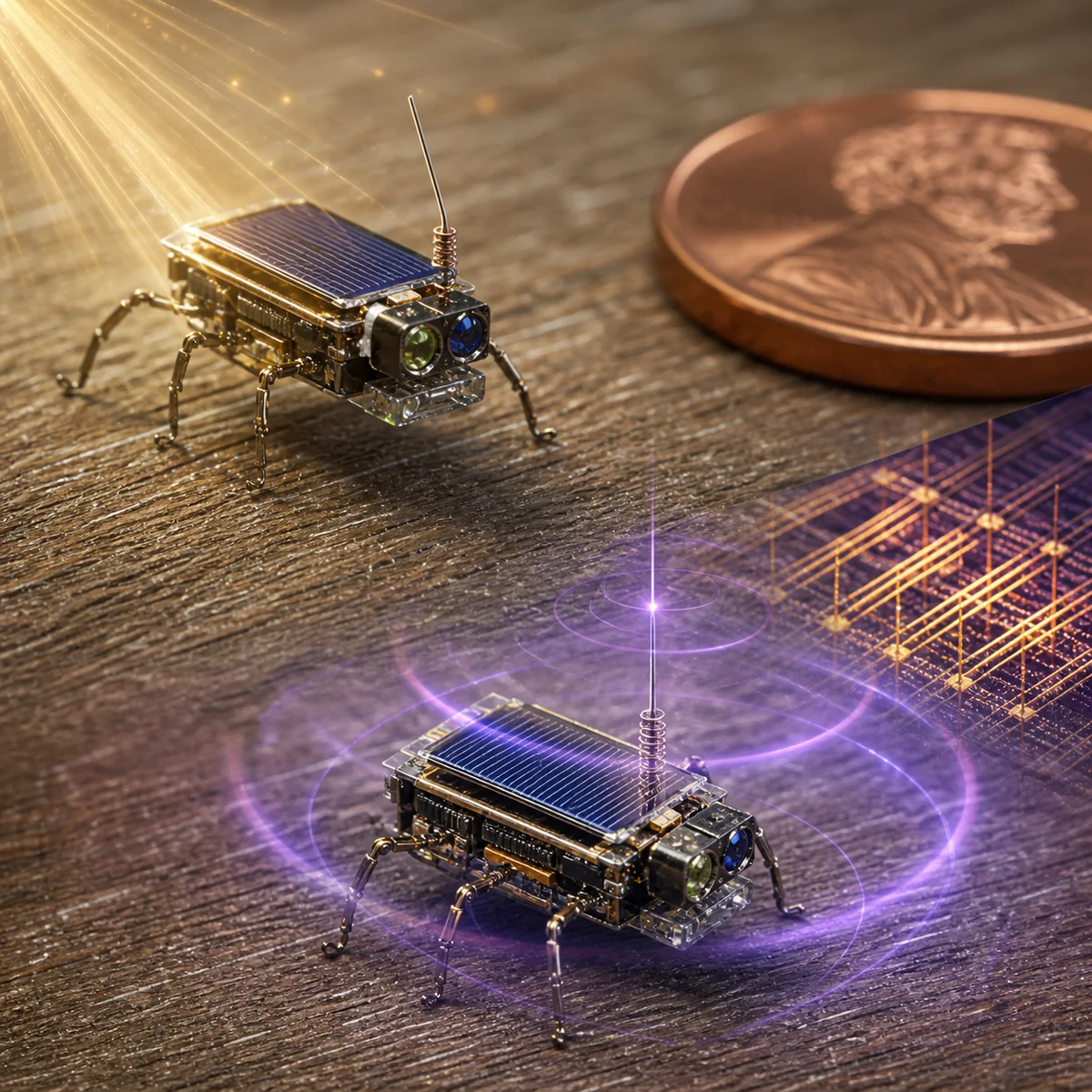
MilliMobile is roughly the size of a penny and has no onboard battery. Small solar cells and a radio-frequency energy harvester collect power from ambient light or transmitted radio waves. When enough energy accumulates, the robot drives; when the supply drops, it stops, waits, and resumes after harvesting more. Interruption is part of the operating system rather than a failure.
That rhythm lets a tiny platform carry sensors and payloads several times its own weight without devoting most of its mass to stored energy. Wheels and onboard control turn scarce incoming power into short movements, allowing the robot to inch across a surface and collect information where regularly replacing batteries would be impractical.
The scale creates limits as well as charm. Reported tests put its speed at about 30 feet per hour, and motion depends on available energy. MilliMobile is a research prototype, not a continuously roaming general-purpose rover or a substitute for a fast powered robot. Its distinctive idea is persistence through pauses: use whatever light or radio energy reaches a coin-sized machine, do a little work, wait without anxiety, and continue when the environment provides the next charge.
Sources