Share
Share







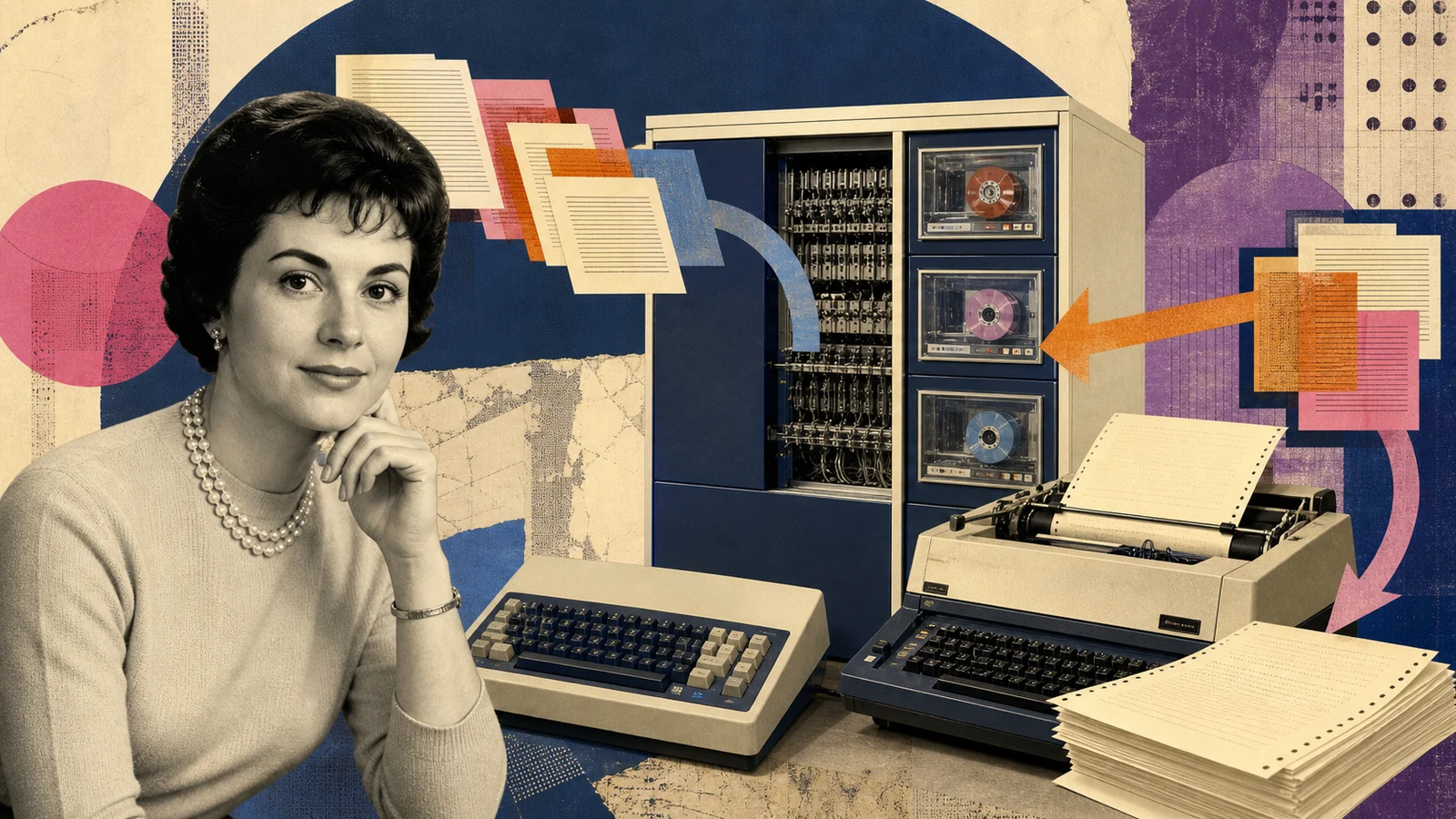
A mechanical typewriter makes writing physical immediately. Press a key and a metal type element strikes ribbon against paper. The mark is useful precisely because it stays put, but that permanence turns revision into labor: erase, cover, correct, or type the page again. Evelyn Berezin helped establish a different sequence for office work. Text could exist electronically before it became a final paper copy.
Berezin arrived at word processing with experience in real-time computing, not simply office-machine design. Trained in physics, she worked as a logic designer and eventually led a logic-design department. At Teleregister she designed online real-time systems, including a large reservation system delivered to United Airlines. The Computer History Museum describes three linked processors serving sixty cities with a one-second response time.
That background mattered because an office document is also changing information. A useful machine had to accept input, preserve it, apply corrections, and produce an updated version on demand. Reservation computing had taught Berezin to design systems that responded to users and managed information as it changed. The application was different, but the core idea—that a machine should hold and update a live state—carried naturally toward writing.
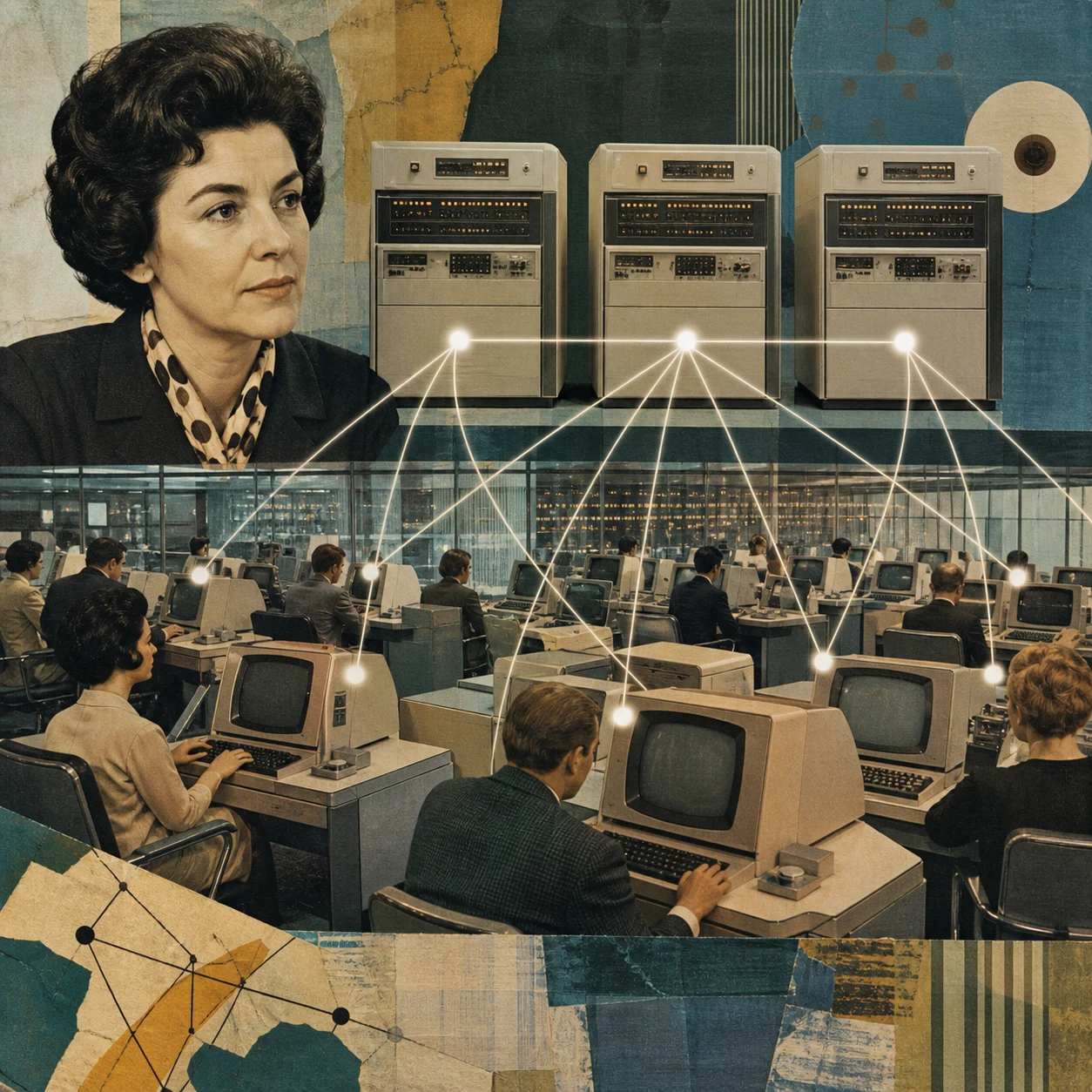
In 1969, Berezin founded Redactron to build mass-produced word-processing systems. Founding the company was itself a technical and institutional act. The Computer History Museum notes how rare it was for a woman to reach senior technical management at the time and how much harder it was to enter executive leadership. Berezin created the organization in which she could pursue the product.
Redactron's flagship became the Data Secretary. Stony Brook's profile describes electronics built from thirteen MOS chips sourced from several companies and Redactron itself, including an early simple microprocessor. The product began shipping in 1971, during a period when integrated circuits were changing what a dedicated office machine could contain. Computing no longer had to mean only a room-sized general-purpose installation.
The first Data Secretary did not have a screen. Its system included a separate keyboard, electronic memory, cassette drives, and typewriter output. Stored text could be corrected and replayed through the printer so that the paper received a later version rather than necessarily preserving the first sequence typed. The leap was not yet on-screen editing; it was separating keystrokes from the clean final copy.
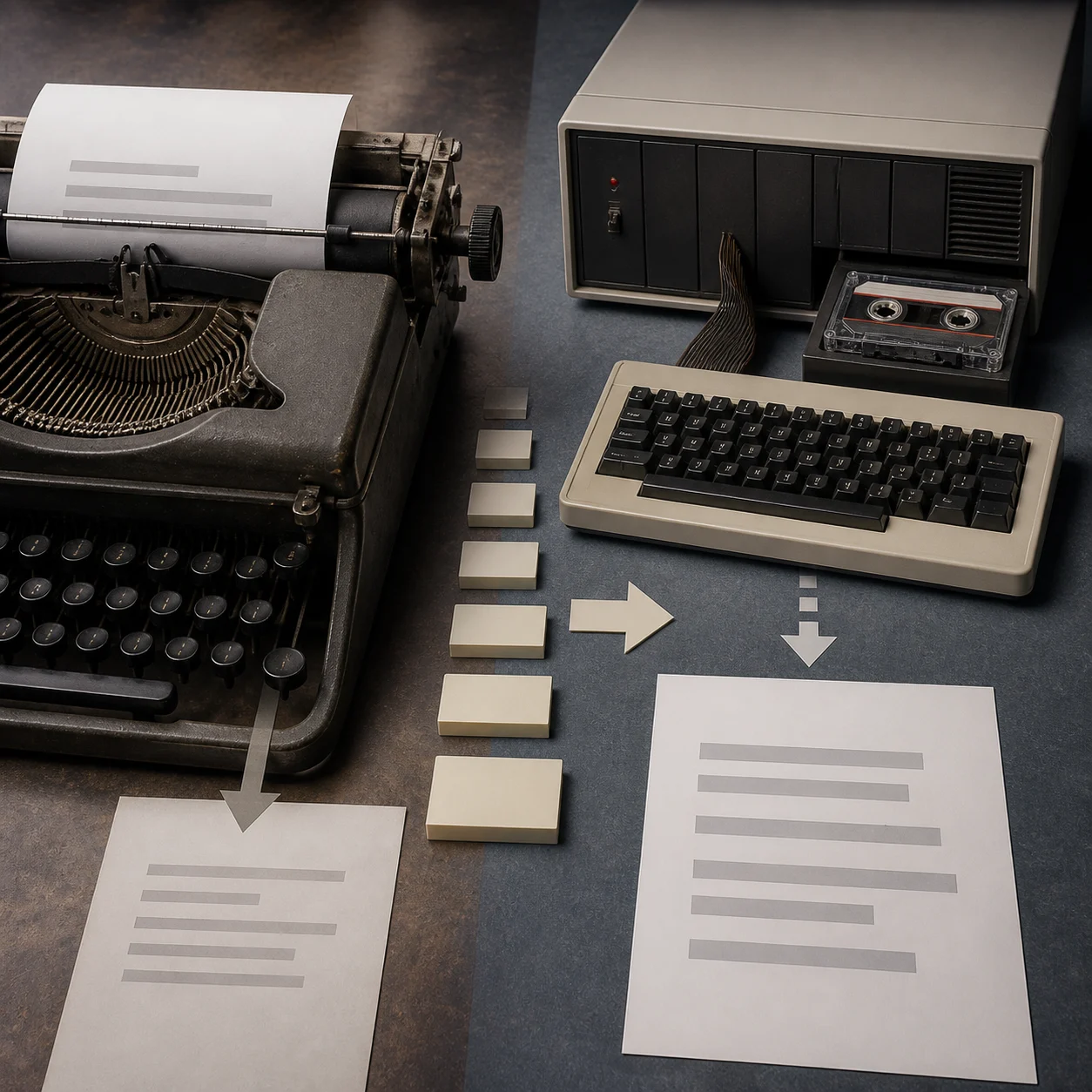
That separation now feels ordinary enough to disappear. We expect a cursor to move, text to be inserted, mistakes to vanish, and paragraphs to survive revision without a fresh sheet. Redactron's first system reached an earlier but decisive point: typed content could be stored, corrected, and printed again, making “typing” and final output two stages joined by electronic storage.
The machine did not merely automate correction fluid. It changed what a document could be during composition. Once text existed as machine-managed information, an operator could revise stored material before producing a clean copy. Paper became an output rather than the only place where language lived. That conceptual shift would later become fundamental to personal computing, but Redactron pursued it before a general-purpose computer sat on every office desk.
The company reached more than 500 employees at its peak, evidence that the Data Secretary was not only a laboratory demonstration. Berezin sold Redactron to Burroughs in 1976 and continued there for several years. The story therefore spans invention, manufacturing, sales, and organizational leadership—a full commercial attempt to place computerized editing into ordinary document work.
Calling Berezin “the inventor of the first word processor” compresses a complicated history into a brittle superlative. Different earlier and contemporary systems qualify depending on whether the definition emphasizes text editing, magnetic storage, display, dedicated office use, or mass production. Computers and office machines were converging through work by many people and companies. An absolute first can obscure the evidence that actually makes Berezin important.
A more precise description is stronger. Berezin designed early real-time systems, founded Redactron, and led development of the Data Secretary, a pioneering early mass-produced computerized word-processing system. She made technical decisions and built a company around a clear office problem. That claim does not require pretending one person invented every component or every idea that electronic writing would use.
It also restores the entrepreneurial dimension. A prototype can prove a mechanism, but an office system must be manufactured, installed, explained, maintained, and trusted with daily work. Redactron translated electronics into a product category and a new routine for typists. More than circuitry stood between the concept and the desk; Berezin organized the bridge.
The Data Secretary's essential addition was an editable interval between thought and final print, supported by logic, memory, storage, and a company willing to manufacture the system. The machine's memory, rather than a display, was the decisive hinge. Berezin helped office writing stop being identical to its first physical impression. The document could change inside the machine—and that is the behavior every later word processor inherited.
Sources