Share
Share







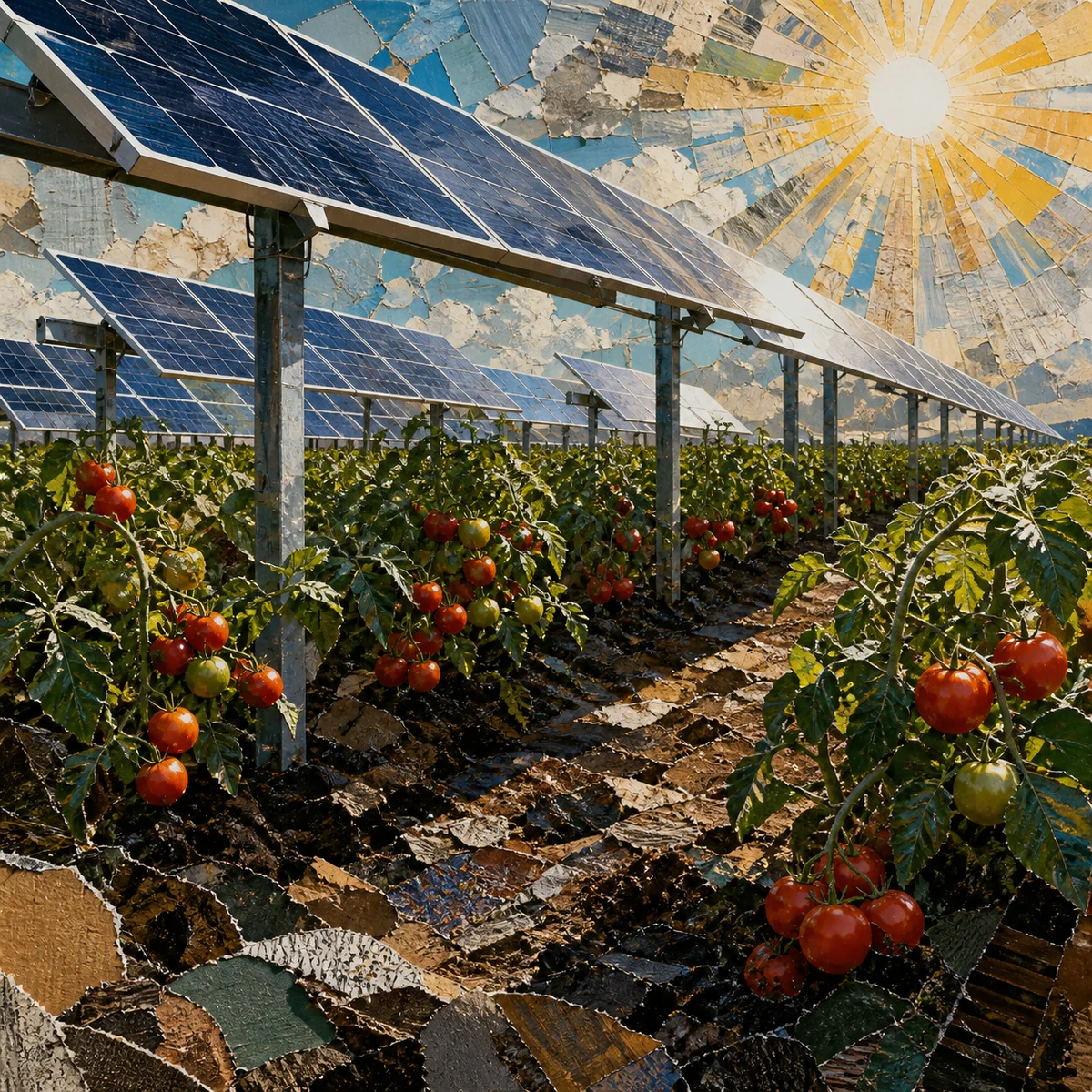
A field does not always have to choose between food and electricity. Agrivoltaic systems raise or space solar panels so crops can grow among them. In experiments that included tomatoes, the panels cast partial shade, changed the field's microclimate, and reduced some of the heat and water stress plants faced while the array continued generating power.
That arrangement can create reciprocal benefits. Crops use the moderated conditions below; vegetation and moist soil can also keep the immediate environment around panels different from bare ground. The most useful measure is not whether either system reaches its isolated maximum, but whether the combined land produces valuable crops and electricity while using water effectively. In some settings and seasons, crop yields improve.
“Some” carries the science. Results depend on crop biology, local climate, panel height and spacing, water supply, and the particular year. Too much shade can reduce photosynthesis; a crop adapted to cooler conditions may respond differently from a heat-stressed tomato. Agrivoltaics is therefore a design problem, not a guarantee that panels make every farm better. Its strange promise is conditional but real: one patch of sunlight can be divided in space and time, feeding leaves below and wires above.
Sources