Share
Share







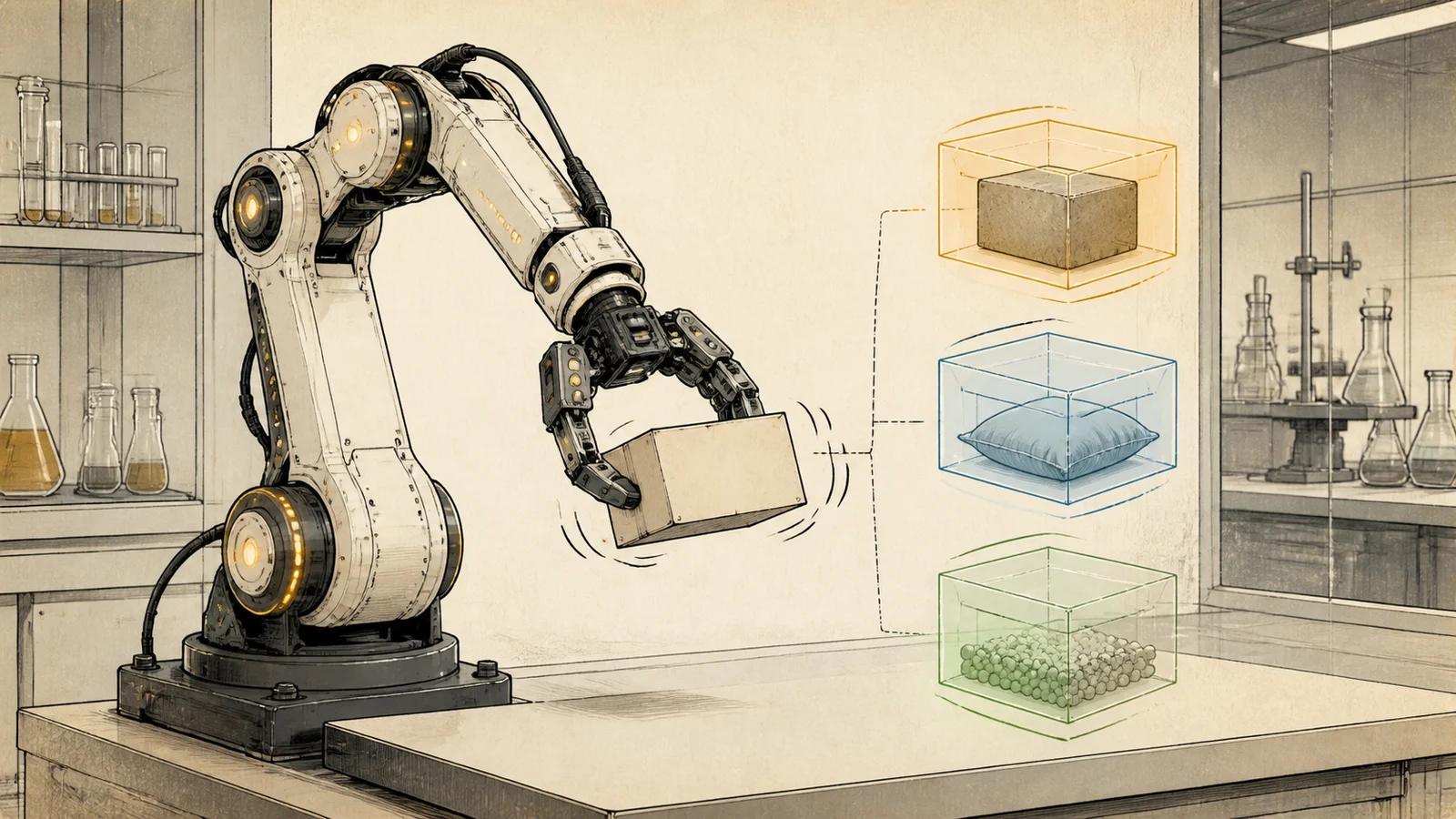
A closed box does not have to be transparent to tell you something about its contents. Pick it up and your wrist registers weight. Tilt it and a loose object slides. Shake it gently and the timing of a thump suggests how much empty space remains. Human handling turns motion into evidence almost automatically. A research system from MIT, Amazon Robotics, and the University of British Columbia gives a robot a computational version of that skill.
The robot lifts and gently moves an object using an ordinary arm. It does not require an external camera, scale, or specialized tactile skin for the estimate. Instead, it reads joint encoders already located in the motors. Those sensors report the rotational position and speed of each joint as the arm responds to the object. A heavier box changes that trajectory differently from a light one under the same commanded action.
This internal sense of body position and motion is called proprioception. Humans feel it imprecisely through muscles and joints; robots can record angles and motion with numerical detail. The research system treats those readings as a trace of the interaction. The object remains visually closed, but its properties leave fingerprints in how the arm moves.
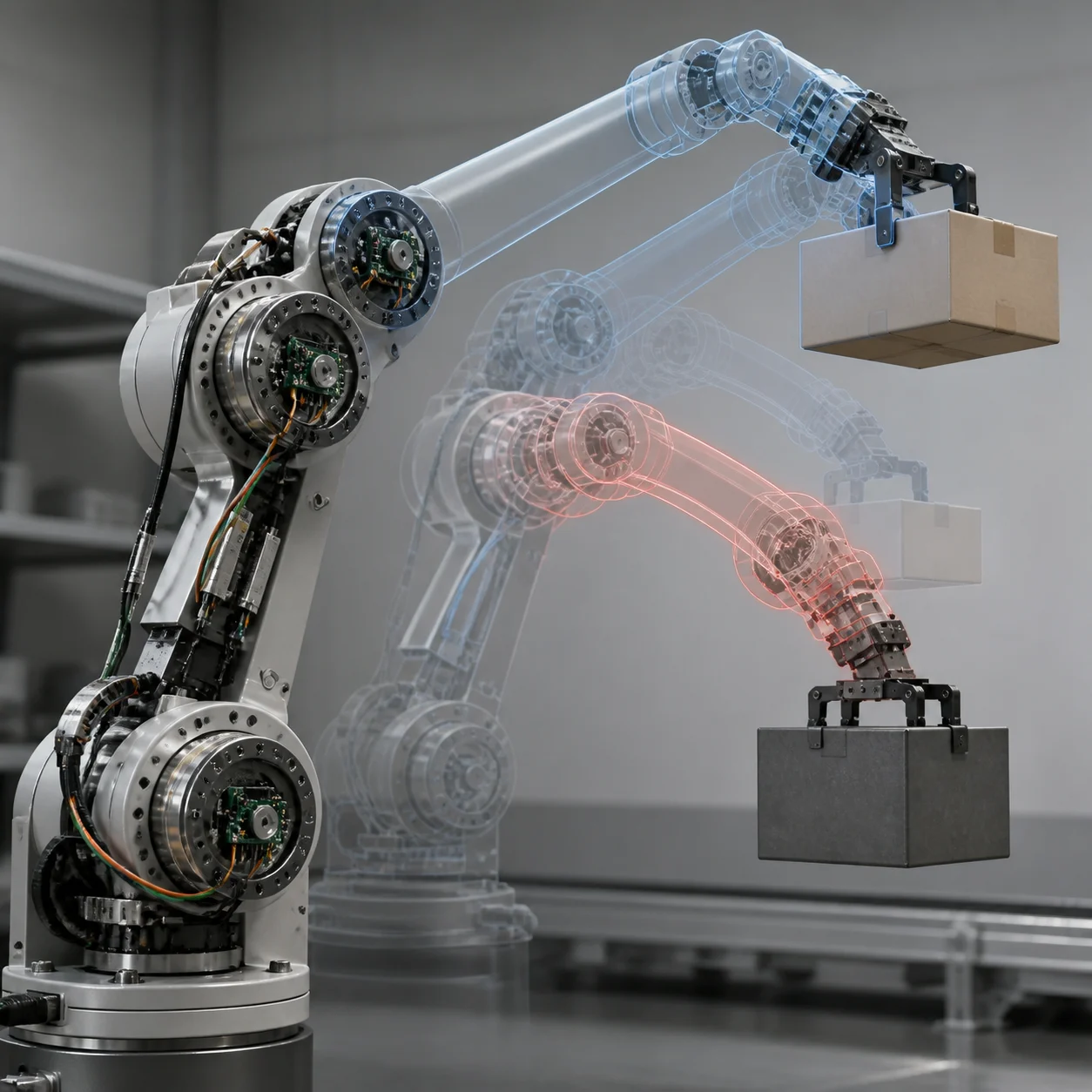
A simulation provides the second half of the method. One model represents the robot and its motion; another represents the object and how it responds to force. The algorithm runs candidate versions of the interaction with different values for mass, softness, or another property. It asks which simulated object would have made the arm follow the measured path.
The simulation is differentiable, meaning it can calculate how a small change in an input property changes the resulting motion. Rather than blindly trying every possible mass, the algorithm follows that sensitivity toward a better match. Once the simulated trajectory aligns with the real joint data, the property producing it becomes the estimate. The researchers reported that the calculation could take only seconds and use a single real-world trajectory.
The team built its simulations with NVIDIA's open-source Warp library, which supports differentiable physics. More important than the software name is what that structure permits: the algorithm obtains gradients through the modeled interaction instead of training a statistical predictor on a vast labeled collection of boxes. MIT reported that its mass estimates were as good as some more complex and expensive methods that incorporate computer vision.
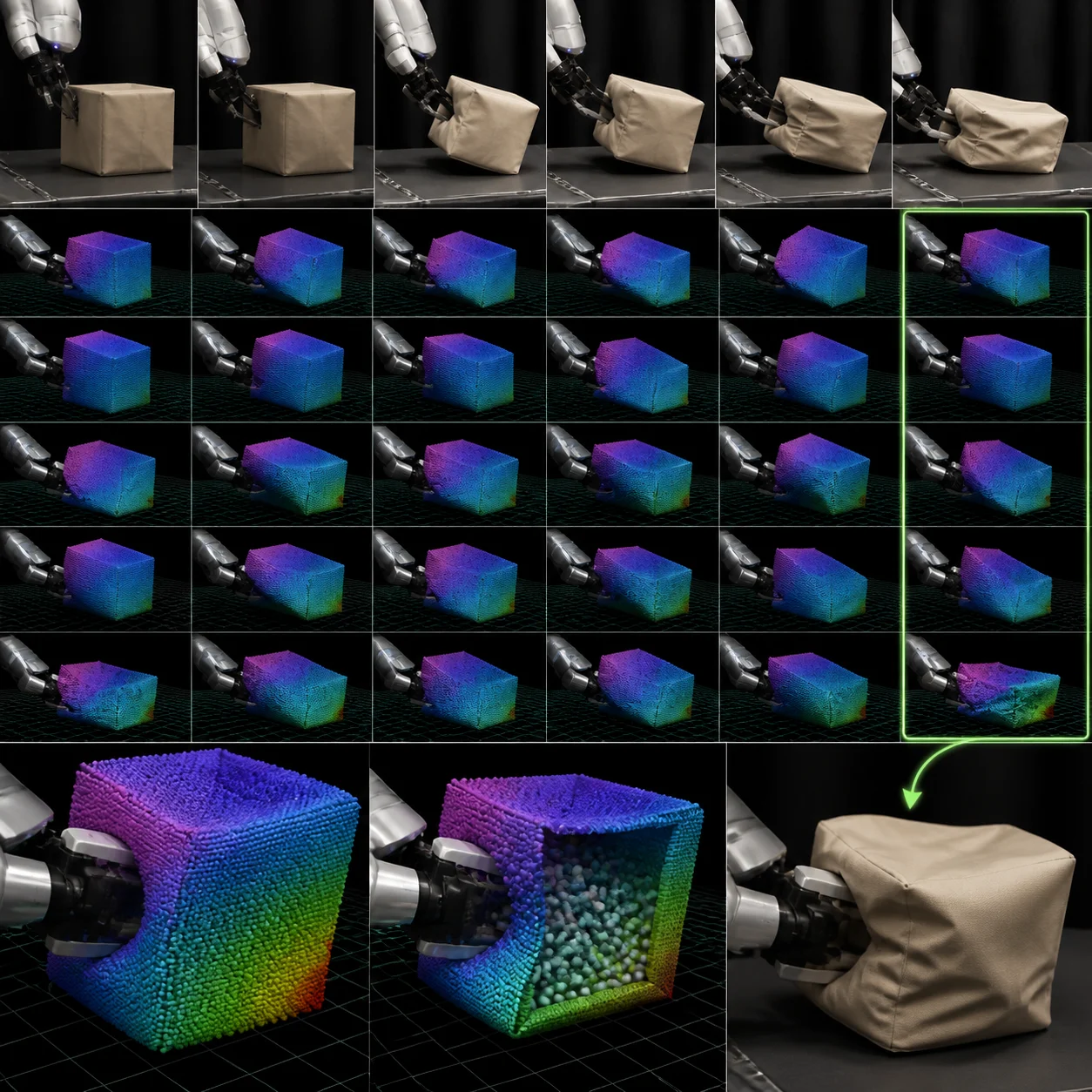
Mass is the clearest example. Apply the same force to a heavier object and it accelerates differently. Softness changes contact and deformation, which also alters motion. A container with moving contents adds its own dynamics as material shifts after the hand starts or stops. With a suitable model, the approach could extend to moment of inertia or the viscosity of a fluid. Every new property requires a simulation capable of representing the relevant physics.
That modeling requirement is both the strength and the boundary. The robot does not discover an unconstrained truth about any object it encounters. It identifies parameters inside a model chosen for the tested object and interaction. If the digital representation omits an important behavior—granular settling, leakage, flexible packaging, unexpected joints—the match can be wrong even when the computation works perfectly. A differentiable simulation is an interpretable measuring instrument, not mechanical omniscience.
The system's economy is useful. Joint encoders are common robot components, so the method can extract more perception from hardware the arm already carries. In a dark basement, dusty rubble, or another environment where cameras struggle, handling could supplement visual information. The researchers do not present it as a replacement for computer vision. Combining sight with proprioception could make later systems stronger than either sense alone. Because the calculation does not require an extensive training set, the researchers also expect less dependence on whether a scene resembles examples seen during training.
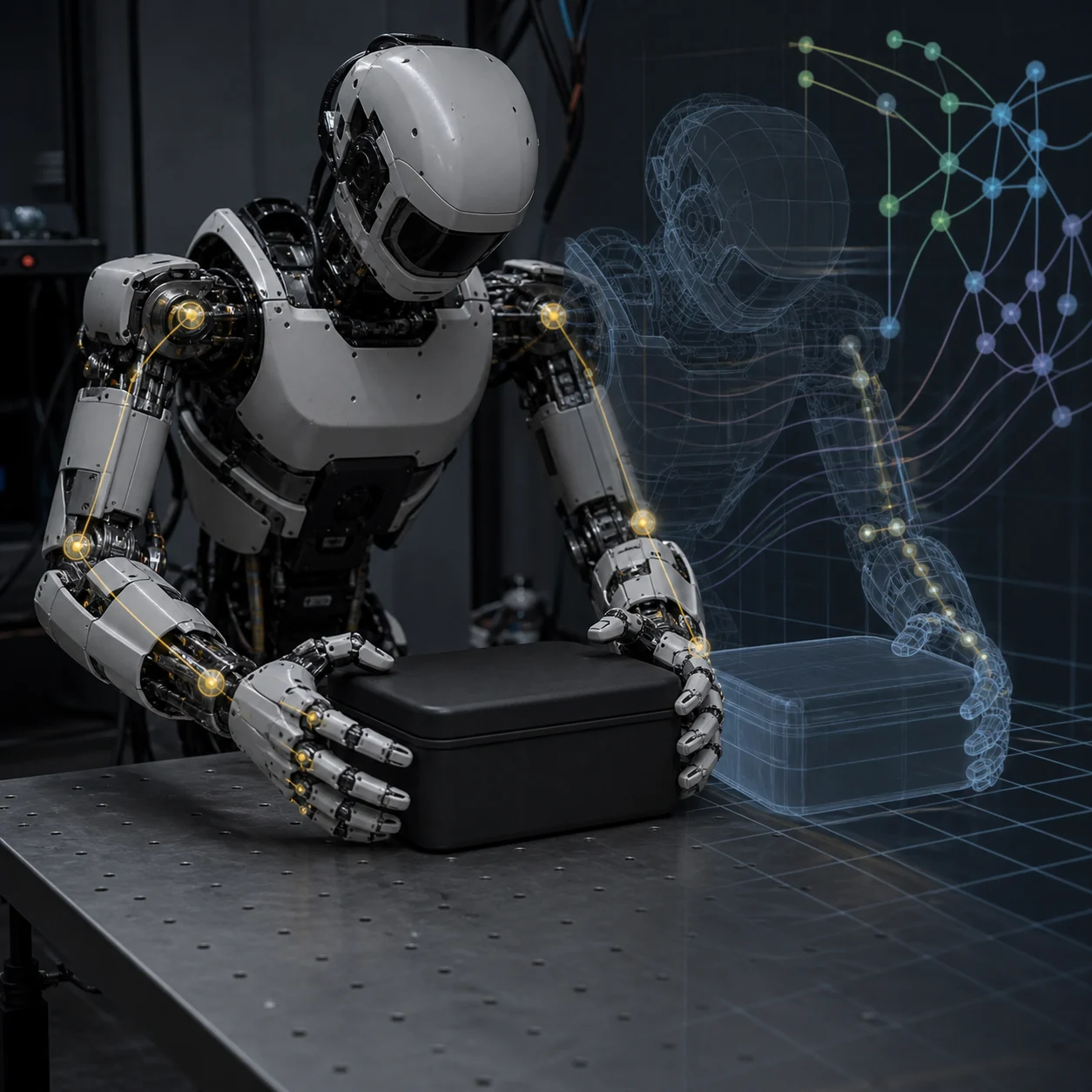
Future tests are aimed at softer robots and more complicated contents, including sloshing liquid and granular material such as sand. Those cases are not achievements already demonstrated; they are the next stress tests for a method whose accuracy rests on its digital twin. The harder the material is to model, the harder it becomes to read the real motion backward.
Gentleness also matters. “Shaking” evokes a robot rattling every package, but an informative action can be controlled and small. The arm chooses a motion that produces measurable differences without treating the object as indestructible. Future manipulation systems would need to consider fragility, safety, and whether an unknown container should be moved at all. Perception through action always changes the thing being perceived, even slightly.
The prototype's estimates depend on the objects, simulations, and scenarios tested. Results in a research setup do not guarantee that a warehouse robot can diagnose every unmarked parcel or that a rescue robot can safely infer every piece of rubble. What the work establishes is a route from internal sensor data to physical properties. The robot picks up a mystery, compares what it felt with worlds inside a simulation, and returns the version whose motion fits. A closed box becomes legible through the arm holding it.
Sources