Share
Share







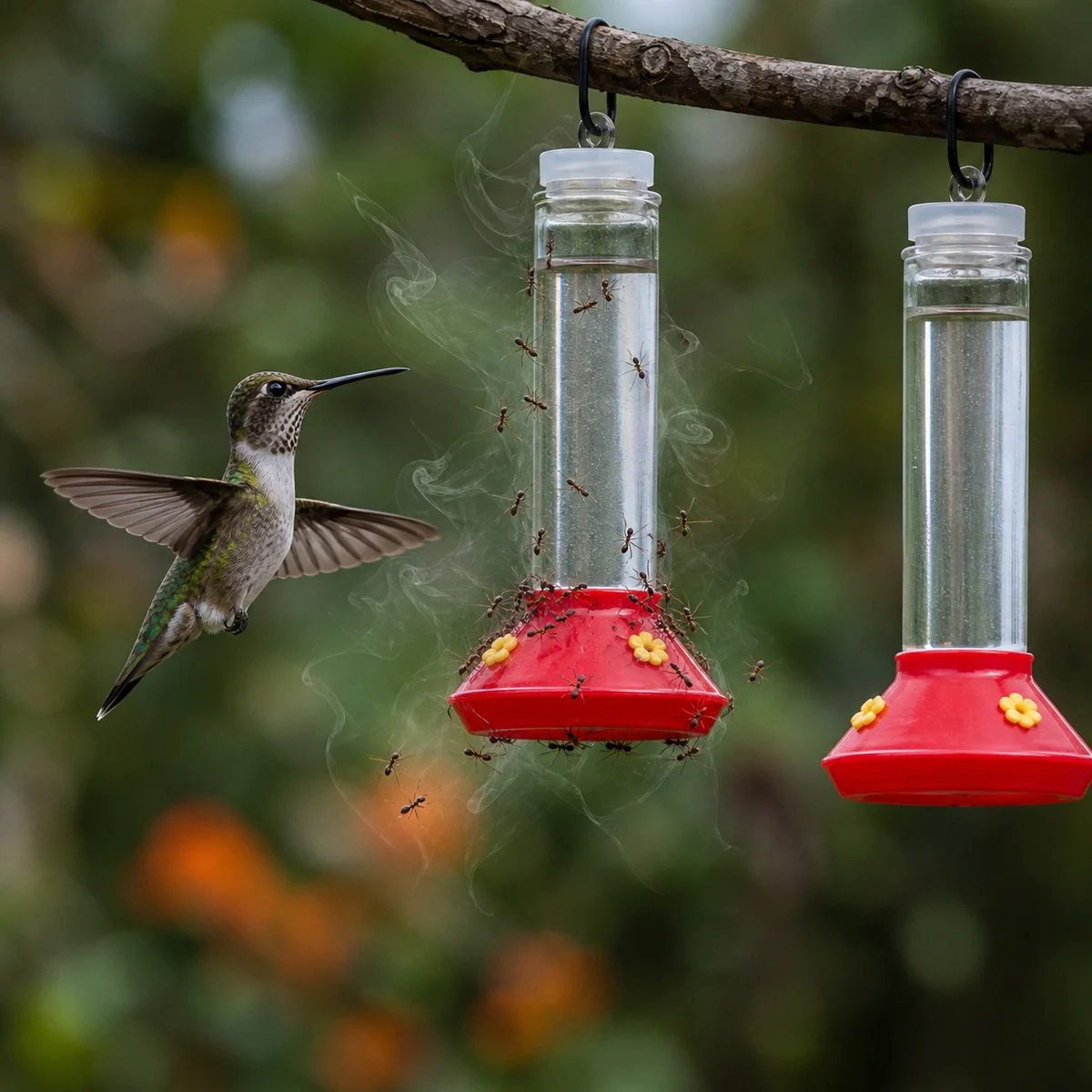
Hummingbirds are famous for vision, but feeder experiments showed that smell can influence where they choose to eat. Researchers offered more than one hundred birds sugar water paired with different odors. The birds avoided feeders carrying ant defensive chemicals, including formic acid, while showing no comparable avoidance of control odors or a honeybee-associated scent.
That pattern matters because ants can compete for nectar and defend food sources chemically. Detecting their warning compounds before landing could save a hummingbird from an unpleasant encounter. The experimental controls also helped separate a response to specific biologically relevant chemicals from a simple dislike of any unfamiliar smell.
The study does not map everything a hummingbird can smell, and it does not make odor the bird's dominant sense. It establishes a narrower, more useful point: hummingbirds can detect particular foraging cues with their noses and alter a decision in response. The hovering inspection near a feeder is therefore not only visual. Some danger arrives invisibly, and the bird can smell it before touching down.
Sources