Share
Share







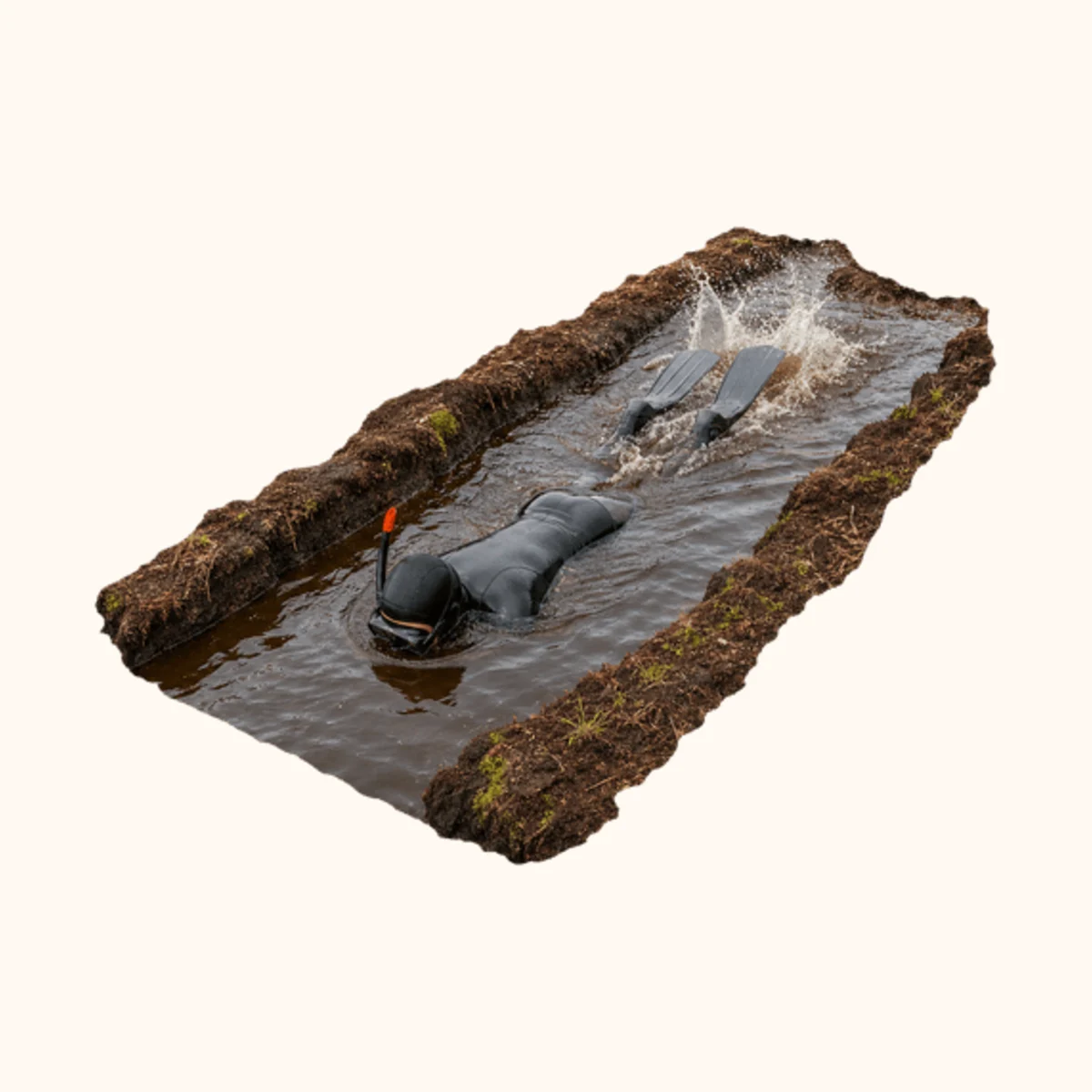
At a peat trench in Llanwrtyd Wells, Wales, a championship lane appears for a sport that looks like swimming until the rules remove most of swimming.
The World Bog Snorkelling Championships ask competitors to complete two lengths of a bog trench—120 yards in total—and touch the post at each end. The turn post must be touched above the water. Timing does not stop for rest, and anyone taking too long on the first 60-yard length can be asked to leave at the turnaround. This is a race, even if the course resembles a ditch with excellent publicity.
The equipment is straightforward: mask, snorkel, and flippers or fins. Competitors supply their own masks and snorkels; a limited number of flippers may be borrowed. Mono-fins and webbed gloves are prohibited. Faces stay in the water so the snorkel can do its one assigned job, though an occasional look up is allowed to correct direction.
Then comes the rule that gives the event its beautifully backward logic: no recognized swimming stroke is permitted. The one exception is doggy paddle, and even then the hands and arms must remain below the waterline. Many racers rely almost entirely on leg propulsion. The kit says swimmer. The technique says human torpedo negotiating soup.
There are two trenches, and competitors receive an allocation at registration that cannot be transferred. The official categories include male, female, over-50, junior, local, and fancy-dress prizes. Fancy dress is optional but encouraged, which means speed can share the bog with costumes that would be inadvisable in almost any other body of water.
Close finishes have their own mechanism. Times within 0.2 seconds can be treated as a tie, with a further timed “bog-off” held after the day's final competitor if time allows. Even the tiebreaker sounds as if it was named by the peat.
None of this makes the event casual about safety. Organizers may refuse or disqualify anyone they believe is impaired and at risk, and junior entrants aged 14 or 15 require parental presence and consent.
The championship's charm comes from commitment, not confusion. Nobody has wandered into the bog expecting a normal pool. The rules are specific, the distance is fixed, and the stopwatch is real. Competitors arrive to race through 120 yards of peat-dark water while obeying a rulebook designed to preserve the strangeness. It is not swimming badly. It is bog snorkelling correctly.
Sources